Photographing Tarra-Bulga National Park
About Tarra Bulga
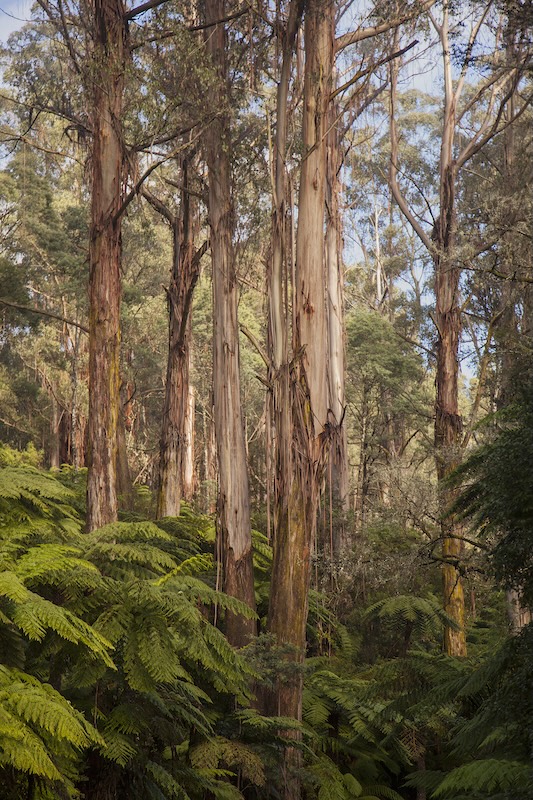
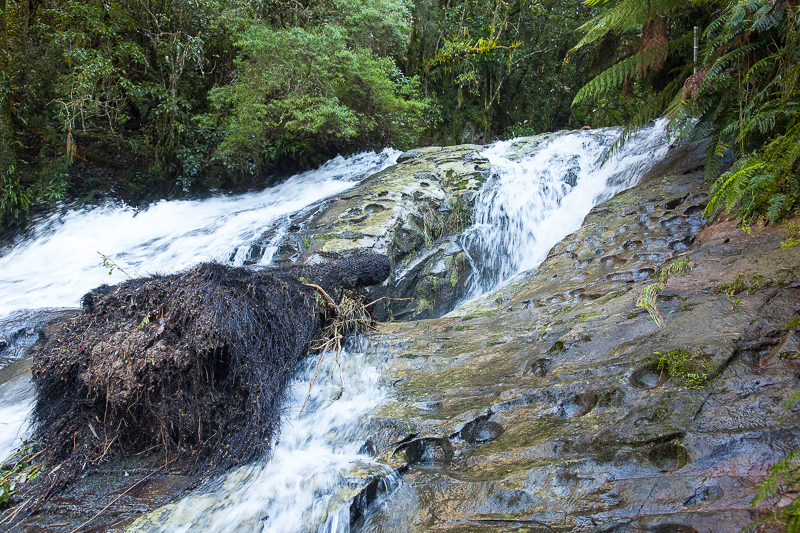
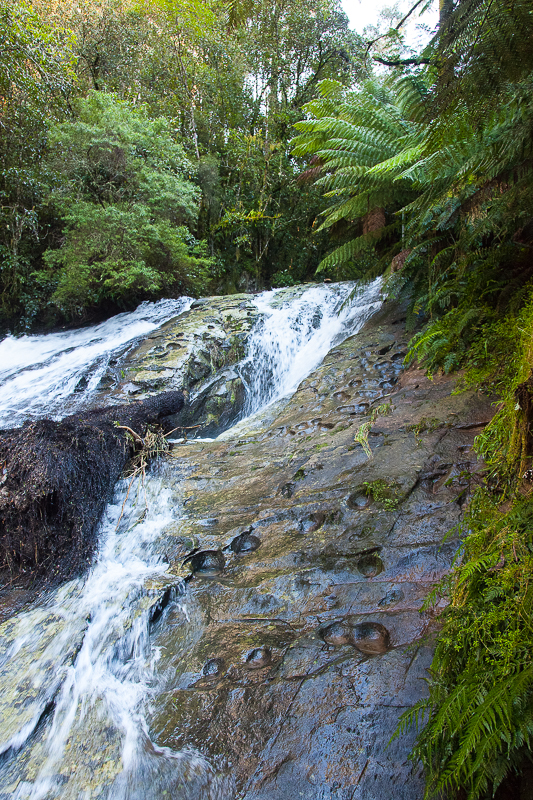
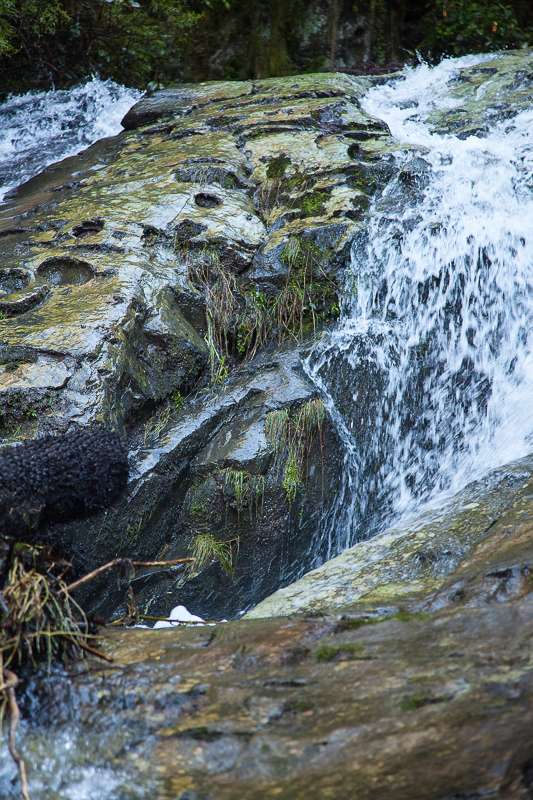
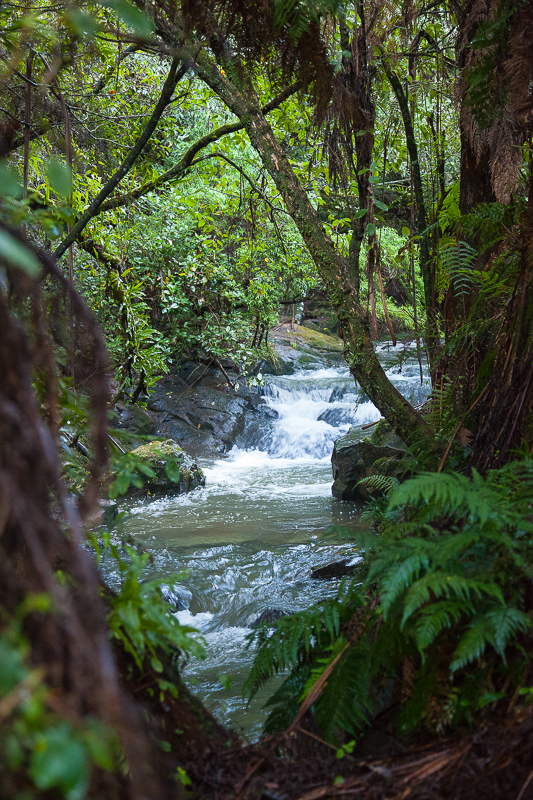
Tarra-Bulga used to be two quite seperate and different parks not far from each other. The 'Tarra Valley' part mostly comprises a section between the Tarra Falls and Cyathea Falls. Neither fall is spectacular, but both are nice. The Tarra River itself is quite small (tiny by world standards), and you can hop over it at locations. The main attraction at Tarra is the walk along the river. This "Tarra Valley Rainforest Track" is exactly what it says it is - a walk of perhaps a kilometer along both sides of the river, crossing it a couple of times. If you have ever tried to photograph a rainforest, then you will know that they are thick and dense. Almost impossible to walk through. Photographing them tends to be a photograph of the few metres or feet in front / side / behind. Not good. This walk, and the river, open up the rainforest though and let you take photos within it. This is the attraction of Tarra Valley.
The 'Bulga' part of the Park is about 2km away, up a hill (but about 4km by road). This is much more open rainforest. Here I watched a Lyrebird dance around its nest and make chainsaw and car sounds. This section of the park has a suspension bridge that lets you get above the tree fern canopy.
Viewpoints
Tarra-Bulga Visitor Centre
Upper park orientation and rainforest walks. Explore both an environmental view and tighter details while remaining on lawful public access.
Best for: the defining location photograph. Lenses: 16–35mm and 24–70mm.
Corrigan Suspension Bridge
Canopy, bridge and fern gully. Explore both an environmental view and tighter details while remaining on lawful public access.
Best for: supporting detail and visual variety. Lenses: 24–70mm and 70–200mm.
Bulga picnic area
Upper-park forest and giant trees. Explore both an environmental view and tighter details while remaining on lawful public access.
Best for: supporting detail and visual variety. Lenses: 16–35mm and 24–70mm.
Tarra Valley picnic area
Lower park, river and cascade access. Explore both an environmental view and tighter details while remaining on lawful public access.
Best for: supporting detail and visual variety. Lenses: 24–70mm and 70–200mm.
Cyathea Falls
Waterfall in lush lower-park forest. Explore both an environmental view and tighter details while remaining on lawful public access.
Best for: supporting detail and visual variety. Lenses: 16–35mm and 24–70mm.
Tarra River cascade
Moving water close to Tarra Valley picnic area. Explore both an environmental view and tighter details while remaining on lawful public access.
Best for: supporting detail and visual variety. Lenses: 24–70mm and 70–200mm.
Tarra Valley has waterfalls, rivers (well one), and dense rainforest. Bulga has more open forest that lets you photograph the trees, the canopy, and the bridge.
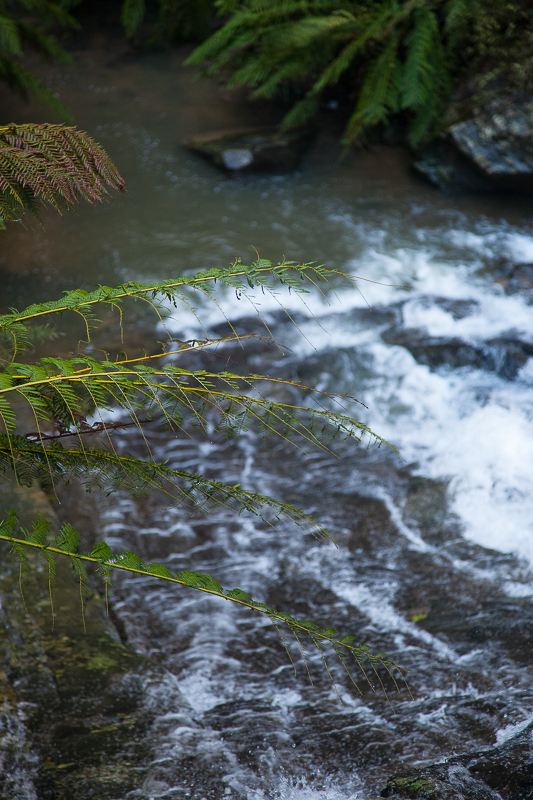
Other Things to Look Out For
How I photographed Tarra-Bulga National Park
What I took - what was in my kit
I took my LowePro Backpack loaded with Canon 5DMkII body, Canon 24-105mm zoom, Canon 16-35mm, and 24mmTS lens, Manfrotto 190 Tripod, and of course a range of lens wipes, spare batteries, sunscreen and bug repellant. I tended to shoot fairly wide (16-40mm) in the Tarra part, but longer (35-100mm) in the Bulga part. I would have liked to have had the 400mm lens with me for the Lyrebird, but those of you that know it - it just looks like a dark brown skinny rooster hiding in a dark brown group of foliage. For a landscape photographer - they are not the best wildlife.
Techniques
Rainforests are DARK - I did not want to shoot with a flash, or carry any lighting equipment, but I did shoot VERY slow. This is a spot where you will not get good photos without a tripod.
Nearby Locations
Nearby photographic locations
Location
Tarra-Bulga National Park, Strzelecki Ranges, Gippsland, Victoria
Approximate coordinates: -38.42870, 146.56950
Markers identify photographic objectives rather than guaranteed parking spaces or open access.
Apple Map – Location and Nearby Photographic Locations
This Apple Map shows the principal subject and nearby photographic locations. Verify signs, road status and track conditions before relying on a marker for access.
Photographic locations
How to Get There
The only way to get to the Park is via car. From Melbourne you take the South Eastern Freeway / Princes Highway (M1) to Taralgon. From here, you turn right (under the railway) onto the C482 to Yarram until you get to Loy Yang. At this point there are two options:
- Via Yarram. You can turn left at Loy Yang and follow the major road (C482) through to Yarram. Just inside Yarram, you can turn right onto the C484 and from there, go to Tarra Valley and then up to Bulga.
- Direct to Bulga. The C483 heads straight at Loy Yang and goes direct to Bulga on the Grand Ridge Rd. This is the shortest route, but the road is narrow, with many many corners. I dont mind narrow country roads, but I know some people do worry about them. I also know city people substantially mis-understand how slow travel on these roads is, and they under estimate how long the trip is.
Driving from the State Capital
The state capital is used as a consistent reference point. Apple Maps calculates the automobile route to this location; your actual route may vary with your starting point, traffic, roadworks and temporary closures.
State capital to destination
Calculating the driving route with Apple Maps…
Distance and travel time are Apple Maps estimates and may change with the route and current conditions.
Current Access / Conditions
Conditions checked: 22 September 2026.
Check Parks Victoria changed conditions and local road information before departure. Storm damage, fire, flooding and maintenance may temporarily close roads, tracks or platforms.
Follow all barriers and remain on formed public access. Do not enter flooded roads, unstable cliff edges, sensitive wetlands or closed tracks.
Best Time to Visit
Best season and light
Choose a season that supports the defining subject, then favour the edges of the day for directional light. Overcast conditions are valuable for forest, moving water and detail; clear evenings suit silhouettes and night work.
Accessibility
The roads into Tarra-Bulga may be narrow, but they are paved. Any 2wd car can happily manage them. The paths in both Tarra and Bulga are very well made, and mostly (all?) flat. I can recall some steps at the Tarra Valley car park, but even those steps have ramps around them. Beyond that, I can't recall any steps. Neither walk is very long (1km?). Great for kids and no problems for people carrying cameras and backpacks.
Where to Stay
At 2:15- 2:45 hours from Melbourne (depending on where you start), I consider this the limit of a 'day trip', but it is doable. I typically stay at Yarram, which has several nice hotels, and several nice pubs. We have stayed at the Ship Inn and Yarram Holiday park. We have seen, but not tried, the Windmill caravan park. There is now accomodation at Tarra Valley, but I have not seen it. Further away from Yarram, there is Traralgon (lots of options), and on the sea there is Port Albert.
Photography Recommendations
Photography recommendations
- Begin with a clear environmental composition before concentrating on details.
- Use a tripod only where it will not obstruct a path, platform, jetty or working area.
- Bracket high-contrast scenes and protect important highlights.
- Use a telephoto to simplify distant layers and avoid approaching wildlife or fragile features.
- Revisit the principal viewpoint as weather, tide or light changes.
Suggested photographic sequence
- Arrive early enough to inspect access and choose safe viewpoints.
- Make the broad establishing photographs while the location is quiet.
- Work through secondary markers and detail subjects.
- Return to the main composition for golden hour or softer late light.
- Finish with blue hour only where the route back is straightforward and safe.
How long should a photographer stay?
1–2 nights is a practical minimum. Add time when weather, water flow, tides or remote-road conditions are central to the planned photographs.
My priority photographs
- A defining environmental view of Tarra-Bulga National Park
- A tighter composition showing the location’s characteristic texture or structure
- A photograph using a person, vehicle, building or vegetation to communicate scale
- A low-light or weather-driven image that differs from the standard visitor view
Suggested Photographic Sequence
Work through the location in an order that makes the best use of changing light and conditions.
How Long Should a Photographer Stay?
Allow enough time to photograph the location in more than one light or weather condition where practical.
My Priority Photographs
Use this section for the practical photographic shot list for the location.
Photo Subjects
Explore related Auspano photography guides by subject.
Photographer Comments & Updates
Have you photographed this location? Share your photographs, viewpoints, photography tips or recent access updates, or ask a question about visiting. When uploading your own photographs, please include your name and the date each photograph was taken. Date any access or track-condition observations; visitor reports may become outdated, so check official information before travelling.