About Hosier Lane
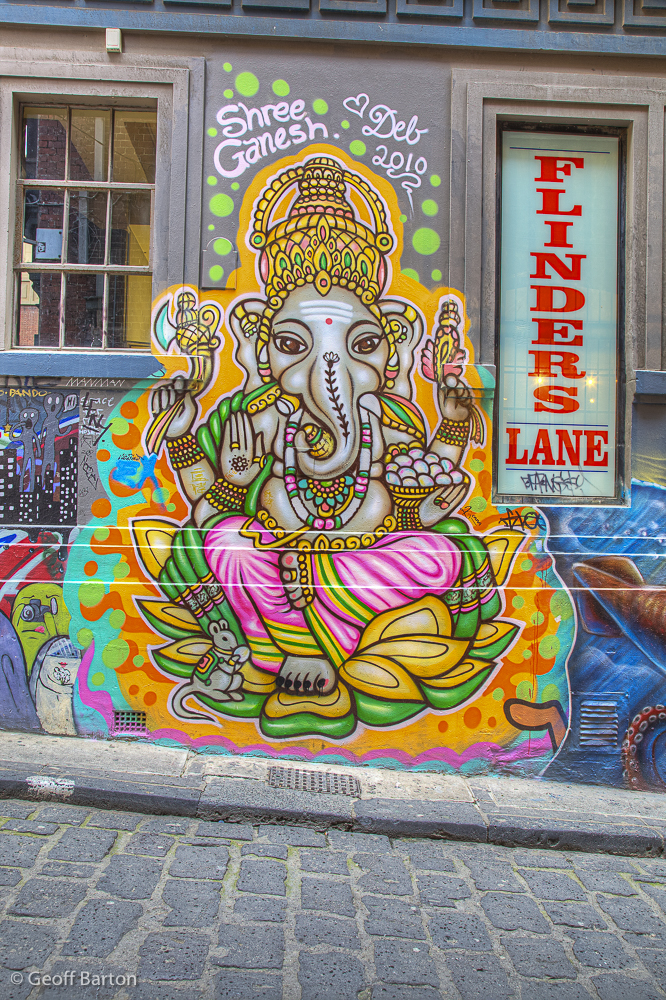
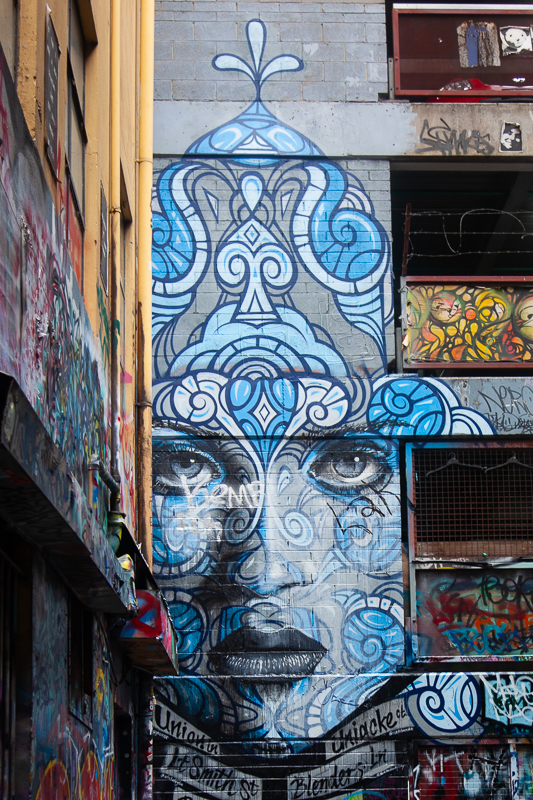
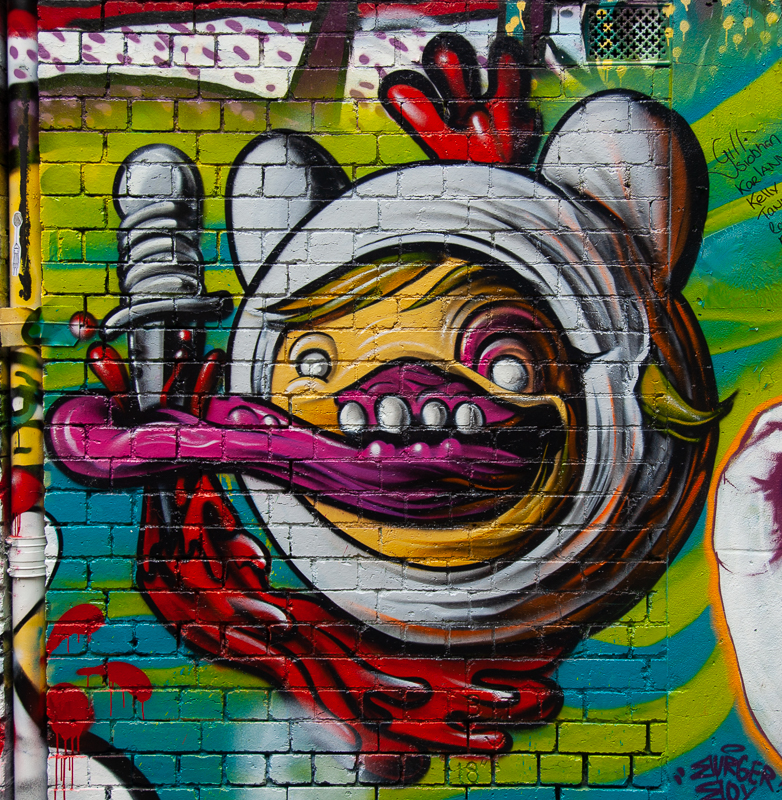
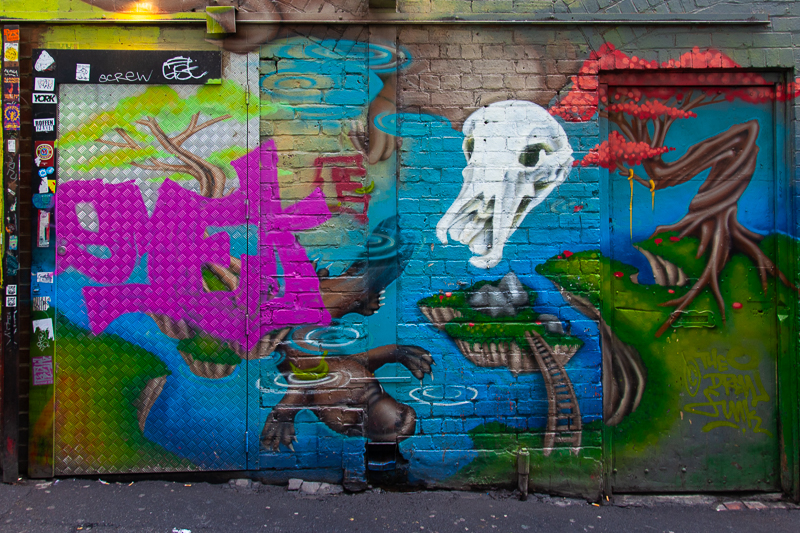
Hosier Lane runs for roughly 100 metres between Flinders Lane and Flinders Street, immediately north of Federation Square. Its walls, doors and service surfaces have become one of Melbourne's most recognised concentrations of street art, including murals, stencils, paste-ups, stickers and successive layers of paint.
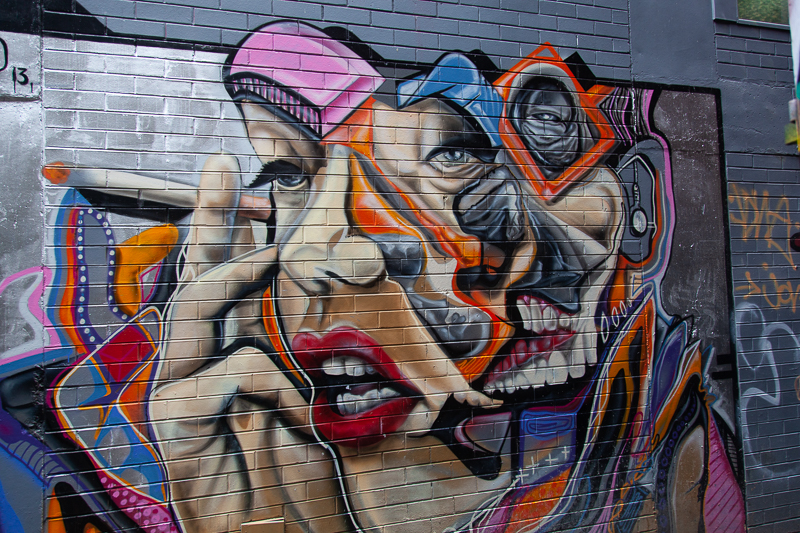
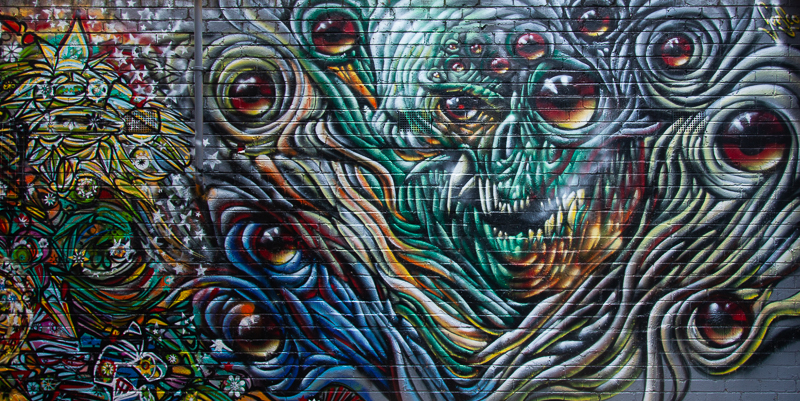
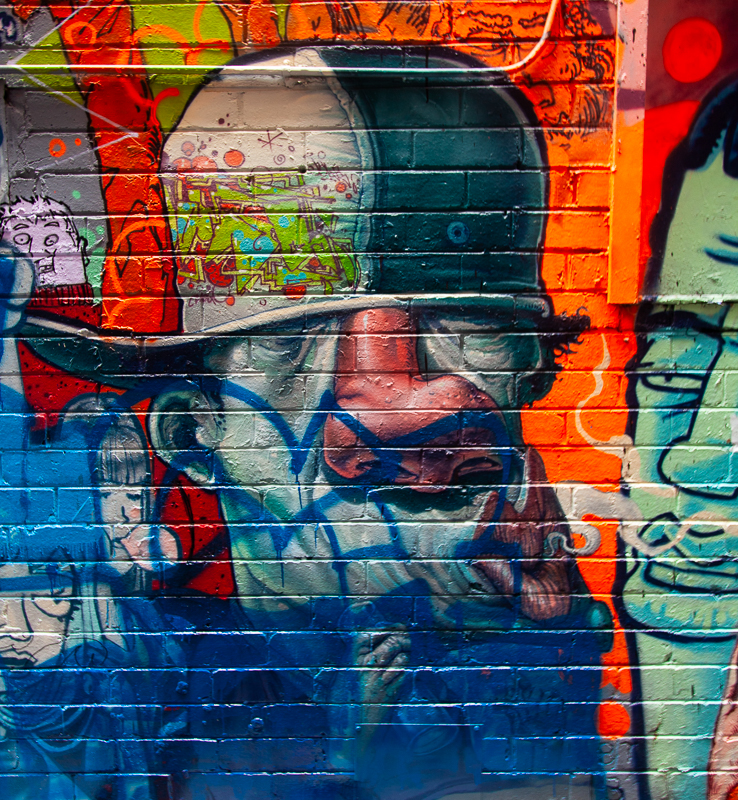
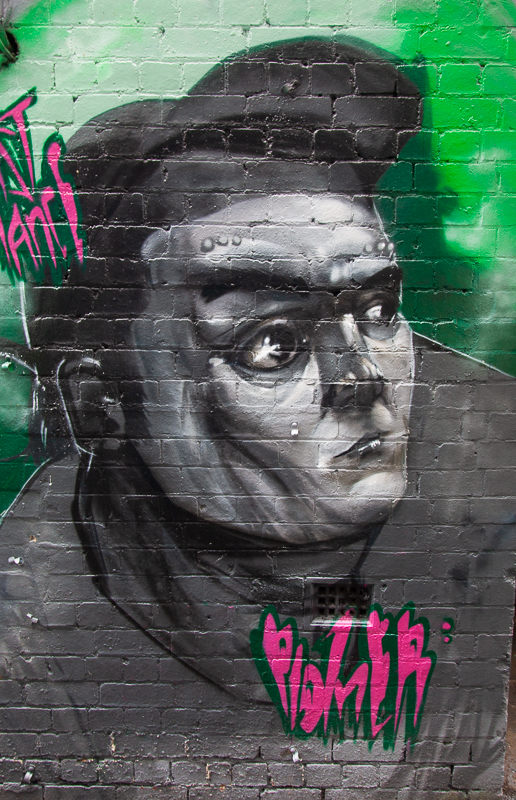
Rutledge Lane forms a C-shaped side loop off the western side of Hosier Lane and should be treated as part of the same photographic location. The art is temporary by nature: a major piece may be altered, covered or replaced between visits. That impermanence is not a defect in the subject; it is the central reason to document the lane carefully and date the photographs.
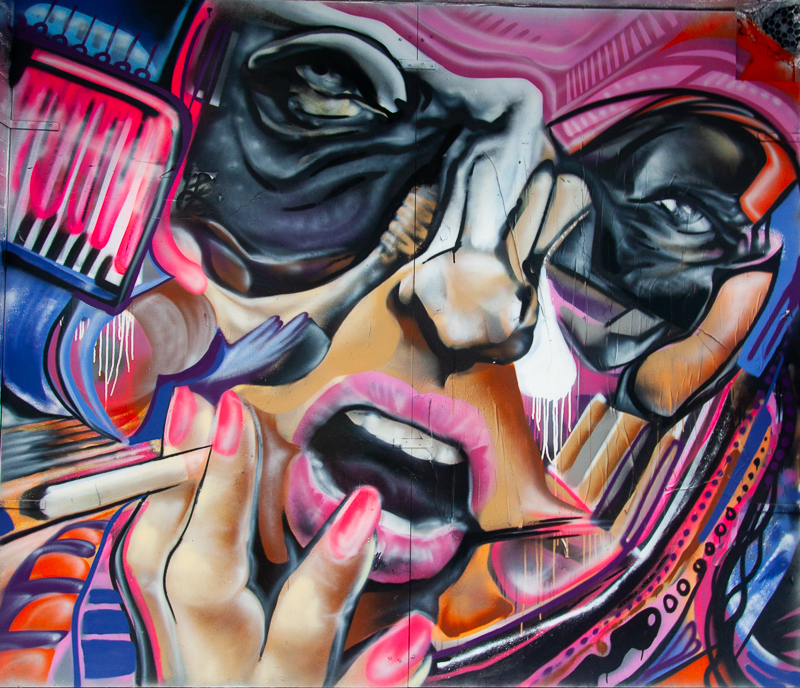
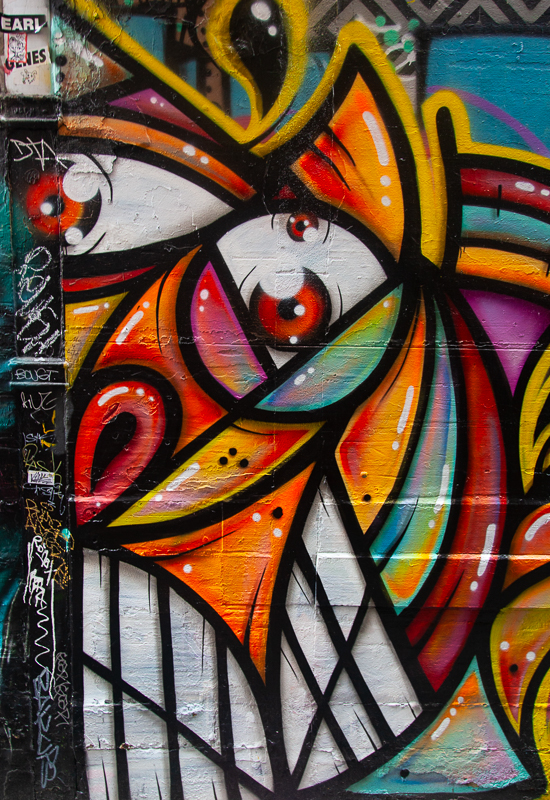
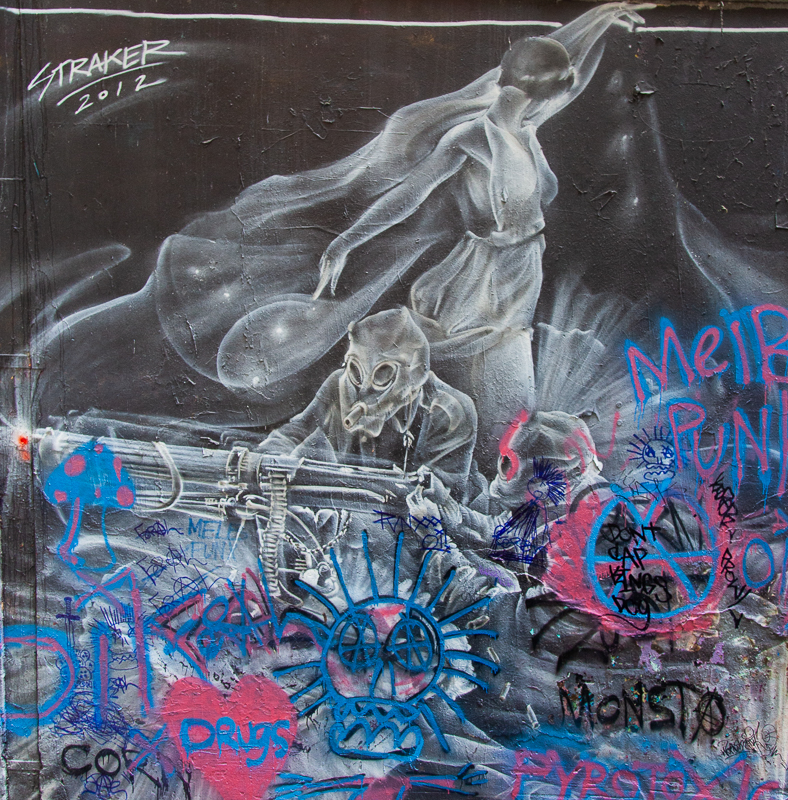
The photographs below record earlier states of Hosier and Rutledge lanes. They are historical examples rather than a guide to what will still be visible today.











Viewpoints
1. Flinders Street entrance
The lower entrance gives an uphill view through the lane and often includes the modern architecture around Federation Square behind the photographer. Use the slope, painted walls and pedestrians as converging layers.
2. Central Hosier Lane
The middle section provides the densest combination of large walls, doors and smaller interventions. Photograph important works square-on, then step aside for oblique compositions that show the art as part of a working laneway.
3. Rutledge Lane loop
The narrower C-shaped side lane feels more enclosed and is particularly useful for close details, opposing walls and layered views through its two openings. Check both directions before choosing the stronger light and background.
4. Flinders Lane entrance
From the upper end, look south down the slope for a whole-lane establishing view. The entrance sign, surrounding buildings and flow of visitors place the street art within central Melbourne.
5. People, artists and changing details
Visitors, tours, workers and sometimes artists are part of the lane's visual life. Include people deliberately for scale and energy, ask permission for close portraits, and do not interrupt anyone actively painting or working.
Other Things to Look Out For
How I Photographed Hosier Lane
What I took
I carried a LowePro backpack with a Linhof Technorama loaded with Velvia 50 for panoramic work, a Canon 5DSR, Canon 24 mm tilt-shift, Canon 16–35 mm and Sigma 50 mm Art lenses, a Manfrotto 190 tripod, lens cloths and spare batteries.
Techniques
One successful approach was to photograph near dusk, allowing the city beyond the lane to become darker and less colourful while the painted walls remained an oasis of colour. A passing car during one long exposure produced yellow light trails along the wall—an accidental element that reinforced the urban setting.
For documentary records of individual works, keep the camera parallel to the wall and use a moderate focal length where space permits. For the lane itself, use the slope, walls and people as leading lines. Bright overcast weather provides even colour; after rain, the paving adds reflections. Make several frames when crowds move through rather than expecting the lane to become completely empty.
Other things to look out for
Look above eye level and into door recesses for stencils, paste-ups, signs and small interventions. Record layers of older paint, artists' signatures where visible, temporary installations, puddles, delivery activity and the contrast between painted surfaces and unpainted city architecture.
Nearby Locations
Federation Square and Flinders Street Station
Both are only minutes away and provide major architecture, transport, people and blue-hour subjects.
AC/DC Lane and Duckboard Place
A short walk east along Flinders Lane leads to another important street-art and music precinct, with warehouse fabric and a different atmosphere.
Presgrave Place
This small lane is known for miniature framed works and found-object details rather than Hosier Lane's large, densely painted walls.
Centre Place and Degraves Street
These lanes add cafés, people and classic Melbourne laneway depth to a city photography circuit.
Meyers Place and Croft Alley
Both can extend the walk northward, although artwork and practical access change and should be assessed on arrival.
Location
Hosier Lane
Between Flinders Lane and Flinders Street
Melbourne, Victoria 3000
Central coordinates: approximately -37.81652, 144.96939.
Rutledge Lane branches from Hosier Lane and reconnects in a C-shaped loop. Both are working laneways with pedestrians, businesses, deliveries and occasional painting activity.
Apple Map – Location and Nearby Photographic Locations
The Apple Map identifies five working positions through Hosier and Rutledge lanes, followed by five nearby photographic extensions. Artwork changes frequently, and marker positions are approximate public orientation points rather than fixed mural locations.
Photographic locations
How to Get There
Hosier Lane is directly opposite Federation Square, running north from Flinders Street to Flinders Lane. Flinders Street Station is approximately a five-minute walk away, and numerous train and tram services reach the precinct. The location is within Melbourne's Free Tram Zone.
Walking and public transport are preferable to driving. The Flinders Street end is closest to Federation Square; the Flinders Lane end is convenient when combining Hosier Lane with AC/DC Lane, Centre Place or the eastern CBD.
Driving from the State Capital
The state capital is used as a consistent reference point. Apple Maps calculates the automobile route to this location; your actual route may vary with your starting point, traffic, roadworks and temporary closures.
State capital to destination
Calculating the driving route with Apple Maps…
Distance and travel time are Apple Maps estimates and may change with the route and current conditions.
Current Access / Conditions
Information checked September 2026. Hosier and Rutledge lanes remain public, working laneways and are normally accessible throughout the day. Conditions can change because of painting, maintenance, deliveries, hospitality activity, events or crowd management.
Do not rely on a particular mural remaining visible. Respect barriers, artists at work and business access, and never photograph from the traffic lanes on Flinders Street or Flinders Lane.
Best Time to Visit
Early morning
This provides the best chance of unobstructed walls and whole-lane views, although service and delivery activity may still occur.
Bright overcast weather
Soft cloud gives even illumination, accurate colour and fewer extreme differences between the two walls.
Dusk and evening
Artificial lighting and visitors produce a stronger urban atmosphere. Blue hour is useful for showing the colourful lane against the darker city, but expect crowds and higher ISO settings.
After rain
Wet paving adds reflections and saturated colour. Protect equipment from drips and remain alert to slippery surfaces and vehicles.
Accessibility
Hosier Lane is paved but slopes between Flinders Lane and Flinders Street. Rutledge Lane is narrower, and uneven surfaces, bins, service vehicles, outdoor activity and crowds may reduce the usable width. Step-free entry is available from either end, but temporary obstructions can affect the practical route.
Keep bags and tripod legs close, leave doorways and fire exits clear, and use the quieter main lane if Rutledge Lane is congested. Visitors with mobility concerns may find the gentler approach and departure easiest when planned around the slope rather than repeatedly walking both directions.
Where to Stay
Hosier Lane is in the eastern CBD beside Federation Square, with many hotels and apartments within walking distance. Staying near Flinders Street or the eastern end of Collins Street makes an early visit practical and also supports evening photography along the Yarra.
Southbank is another useful base for combining street art with river, bridge and skyline work. Confirm parking height separately if arriving with a large vehicle.
Photography Recommendations
- Make a complete establishing view from each end before concentrating on individual works.
- Photograph Rutledge Lane as a distinct, more enclosed part of the location.
- Use moderate focal lengths for documentary records and wide lenses selectively for lane depth.
- Keep the camera square to flat art, while using oblique views for environmental context.
- Choose overcast light for colour; use dusk or wet paving for atmosphere.
- Include people deliberately, but respect artists, workers, businesses and identifiable subjects.
- Date and caption photographs because the walls change continuously.
Field composition sequence
Photograph a broad establishing view before isolating individual murals and the layered paint textures. Use pedestrians selectively for scale, and expect the artwork to change between visits.
Suggested Photographic Sequence
- Begin at the Flinders Street entrance with an uphill establishing view.
- Work north through Hosier Lane, photographing major walls and smaller details.
- Enter Rutledge Lane at its southern opening and follow the C-shaped loop.
- Continue to the Flinders Lane entrance for a downhill whole-lane composition.
- Walk back south to exploit the opposite light and backgrounds.
- Finish at Federation Square or continue east to AC/DC Lane and Duckboard Place.
How Long Should a Photographer Stay?
Allow one to two hours for Hosier and Rutledge lanes, including time to wait for compositions and photograph individual works. Allow three to four hours for a wider circuit including AC/DC Lane, Presgrave Place and Centre Place. Repeat visits are justified because both art and street activity change.
My Priority Photographs
- A whole-lane view from the Flinders Street entrance.
- A clean documentary photograph of the strongest current large-scale work.
- An enclosed composition within Rutledge Lane.
- A layered frame combining art, people and the slope of Hosier Lane.
- Small stencils, paste-ups, stickers and traces of older paint.
- An artist-at-work or human-interaction photograph, made respectfully.
- A dusk or wet-pavement image connecting the colourful lane to the surrounding city.
Photo Subjects
Explore related Auspano photography guides by subject.
Photographer Comments & Updates
Have you photographed this location? Share your photographs, viewpoints, photography tips or recent access updates, or ask a question about visiting. When uploading your own photographs, please include your name and the date each photograph was taken. Date any access or track-condition observations; visitor reports may become outdated, so check official information before travelling.