Location: 3M99+XJ Werribee, Victoria ///orbit.kept.sounds (-37.93094669, 144.67036233)
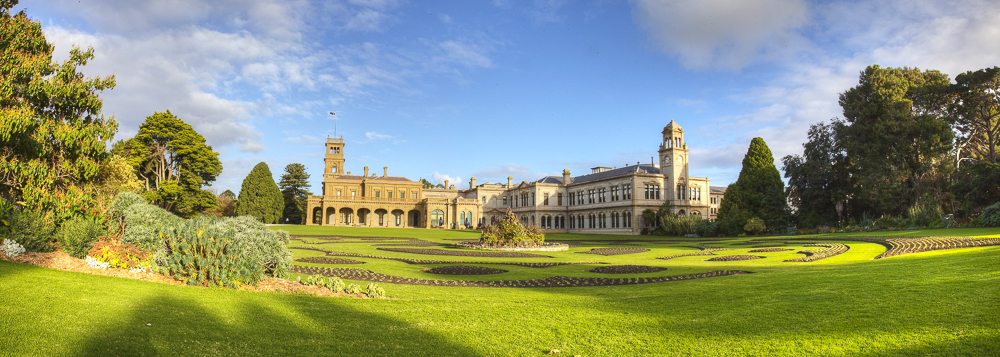
This Mansion is just on the western outskirts of Melbourne. The Mansion is now set in a large park, that includes an Open Range Zoo, and the state Rose Garden, Heritage Orchard and National Equestrian Centre. The Mansion was built in the 1870's by Thomas and Andrew Chirnside. The brothers were Scottish immigrants that founded a Pastoral Empire just to the west of Melbourne.
Werribee Park Mansion is one of Victoria's grandest surviving nineteenth-century estates and one of the strongest architectural photography locations west of Melbourne.
Located approximately 35 km west of central Melbourne, the mansion was completed in 1877 for the Chirnside family, wealthy pastoralists who built their fortune through sheep and wool.
The 60-room mansion combines:
- Renaissance Revival architecture.
- Basalt and sandstone construction.
- A dominant central tower.
- Arcaded verandahs.
- Formal interiors.
- Extensive landscaped gardens.
The mansion forms only part of the photographic attraction.
The surrounding Werribee Park estate also includes:
- The formal parterre garden.
- The Great Lawn.
- An ornamental lake.
- A grotto.
- Historic farm buildings.
- A heritage orchard.
- The nearby Victoria State Rose Garden.
This variety makes Werribee Park particularly useful for a photographic gallery because it allows architectural, garden, detail and landscape photography to be combined within a single visit.
Photography Permit Information
Important for photographers intending to publish their images:
Parks Victoria states that professional or commercial photography within Werribee Park requires a permit.
Amateur or hobby photography using basic equipment generally does not require a permit when the photographs are for personal use only.
If photographs are intended for commercial publication, website use or another professional purpose, check the current Parks Victoria filming and photography permit requirements before the visit.
Current Access - September 2026
Werribee Park Mansion remains open to visitors.
Parks Victoria is undertaking heritage conservation works as part of the Heritage Icons program, but there are currently no access changes to the mansion.
Some visual impacts may occur around the park while conservation works are underway.
Check Parks Victoria before travelling if a particular facade, garden or interior is essential to your planned photography.
Viewpoints
The number and range of views possible here are virtually limitless. I concentrated on two:
- Viewpoint 3: From the side near the flower bed. This view is more the portrait view of the house, with house looking to the left. I like fore-middle- and background to my landscapes and the flower bed provides both the fore and middle ground interest, while the mansion of course is the background.
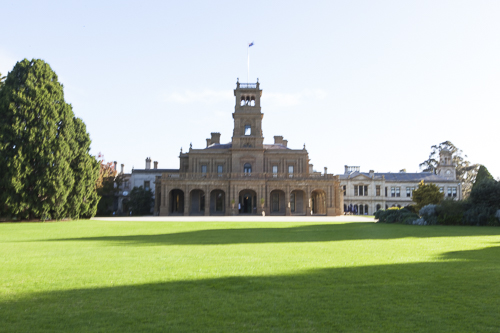
- Viewpoint 1: From directly in front. This is the sort of architectural / technical photo of the buildings. The Mansion has been designed to be viewed from the front, so it one of the more impressive views. The front also has a nice expanse of lawn in front that both provides an unabstructed photo, but also gives a sense of space in wide angle shots.
-
Front Facade and Tower
The principal front elevation is the obvious establishing photograph of Werribee Mansion.
The central tower, long horizontal facade and arcaded verandah create a strong architectural composition.
Look for:
- Symmetrical compositions.
- Strong leading lines.
- Repeating arches.
- Shadow patterns.
- The relationship between the tower and lower wings.
Recommended lenses: 24-70mm and 70-200mm.
A 16-35mm lens can be useful where space is limited, but excessive width can produce converging verticals and distort the tower.
-
Great Lawn
The Great Lawn provides one of the cleanest views of the complete mansion within its landscaped setting.
Moving farther away allows the architecture to sit naturally within the surrounding lawns and gardens.
This is one of the best positions for a photograph that explains the scale and formality of the estate.
Recommended lenses: 35-100mm.
-
Parterre Garden
The formal parterre creates one of the strongest garden-and-mansion compositions at Werribee Park.
The curved flower beds and symmetrical planting provide strong foreground structure leading towards the mansion.
A slightly elevated or carefully aligned viewpoint can emphasise:
- Garden geometry.
- Symmetry.
- Colour.
- The contrast between formal planting and architecture.
Recommended lenses: 24-70mm and 70-200mm.
-
Arcades and Verandahs
The long arcades around the mansion are excellent for more intimate architectural photography.
Look for:
- Repeating arches.
- Strong perspective lines.
- Light and shadow.
- Columns disappearing into the distance.
- Framed views into the gardens.
These compositions work particularly well with a 24-70mm lens.
-
Main Entrance and Architectural Details
Move closer to the building and photograph details rather than making only full-facade images.
Useful subjects include:
- Stone carving.
- Window surrounds.
- Balustrades.
- Doorways.
- Columns.
- Decorative stonework.
- Chimneys.
The 70-200mm is especially useful for isolating these details.
-
Mansion Interior
The interior contains some of the most important photographic subjects in the estate.
Highlights include:
- The grand entrance hall.
- The staircase.
- Minton encaustic floor tiles.
- Corinthian pilasters.
- Columns.
- Reception rooms.
- Library.
- Dining room.
- Original and period furnishings.
Interior light levels can be relatively low.
A camera with good high-ISO performance and a lens with image stabilisation can be very useful where tripod use is restricted.
Always follow staff instructions concerning photography, tripods and access within individual rooms.
-
Grand Staircase
The staircase is one of the strongest interior compositions.
Try:
- Centered symmetrical compositions.
- Vertical framing.
- Looking upward through the stairwell.
- Using railings as leading lines.
- Including a person for scale if appropriate.
Recommended lens: 16-35mm or 24-70mm.
-
Ornamental Lake
The ornamental lake provides opportunities for softer landscape photography.
Look for:
- Reflections.
- Overhanging trees.
- Water birds.
- Garden structures.
- Filtered light.
Early morning or still conditions are particularly useful.
-
The Grotto
The ornamental grotto provides a much more intimate garden subject.
It can work well for:
- Texture.
- Stone detail.
- Reflected light.
- Framed garden views.
Soft overcast light is often preferable to strong direct sun.
-
Farm Outbuildings
The old bluestone farm buildings provide a useful visual contrast to the mansion.
The working buildings help explain the pastoral wealth that made the mansion possible.
Look for:
- Bluestone textures.
- Doors and windows.
- Old farm details.
- Strong shadow patterns.
- Simple geometric compositions.
-
Heritage Orchard
The restored heritage orchard contains fruit trees linked to the original Chirnside estate.
It provides a quieter and less formal photographic environment than the mansion gardens.
Spring blossom and autumn foliage may provide the strongest seasonal images.
Other Things to Look Out For
How I photographed the Mansion
What I took - what was in my kit
I took my LowePro Backpack loaded with Linhof Technorama with Velvia 50 film for the panorama, and Canon 5DMkII body, Canon 24 mm TS, Canon 24-105mm, Manfrotto 190 Tripod, and of course a range of lens wipes, spare batteries, sunscreen and bug repellant.
Techniques
The Mansion is grand on scale, and set in beautiful gardens. I did look at some shots of the details, but really I feel that a grand site likes this needs a wide open view to capture the 'whole' and to impart the sense of scale. This means that I shot wide angle, and in particular I stitched a panograph to enable a higly detailed print to be made. I did look at HDR techniques, but the exposures on the day allowed good dynamic range without the need.
Nearby Locations
Victoria State Rose Garden
Immediately beside the mansion, the internationally recognised garden is strongest during the rose season. Use the geometric beds, arches and repeated colour as foreground for wider estate photographs.
Werribee Park Historic Farm and Orchard
Heritage farm buildings, orchard rows and working-estate history broaden the story beyond the mansion’s grand rooms and façades.
Werribee Open Range Zoo
The adjoining zoo offers wildlife and environmental photography but requires a separate visit, ticket and realistic allowance for time.
Werribee South and Point Cook
The river mouth, foreshore, market gardens and Point Cook Coastal Park provide coastal, bird and sunset subjects within the wider district.
Melbourne’s Yarra River
For a contrasting city-waterfront session, the central river provides bridges, reflections and skyline photography.
Melbourne photographic overview
The main Melbourne guide links to the city’s architecture, street art, gardens and other detailed Auspano location pages.
Location
Werribee Park Mansion
Gate 2, K Road
Werribee South, Victoria 3030
Central coordinates: approximately -37.93095, 144.67036.
The destination marker identifies the mansion forecourt. Individual markers identify photographic objectives within the estate and nearby precinct; use signed public paths and observe temporary work zones.
Apple Map – Location and Nearby Photographic Locations
The Apple Map identifies the principal mansion and garden viewpoints followed by five wider Werribee and Point Cook subjects. Positions are orientation points rather than fixed platforms; obey restoration barriers, venue rules and signed closures.
Photographic locations
How to Get There
From central Melbourne, follow the West Gate Freeway and Princes Freeway towards Geelong, take the Werribee South exit and continue via Duncans Road and K Road to Gate 2. Allow roughly 35 kilometres from the CBD, with travel time varying substantially with traffic.
Public transport generally involves a train to Werribee followed by a bus or taxi connection; confirm the current timetable before travel. The estate has designated visitor parking, including accessible spaces. Use the Melbourne overview page when combining the mansion with a city visit.
Driving from the State Capital
The state capital is used as a consistent reference point. Apple Maps calculates the automobile route to this location; your actual route may vary with your starting point, traffic, roadworks and temporary closures.
State capital to destination
Calculating the driving route with Apple Maps…
Distance and travel time are Apple Maps estimates and may change with the route and current conditions.
Current Access / Conditions
Information checked September 2026. Parks Victoria is undertaking a major heritage restoration project at Werribee Park Mansion, with works expected to continue into late 2026. Scaffolding, protective fencing, room closures or altered access may affect photographs even when the wider park remains open.
Event closures also occur. Check the official Werribee Park change-of-conditions notice immediately before travelling, particularly if the mansion interior or an unobstructed façade is essential. Commercial, wedding and organised photography may require separate permission or fees.
Best Time to Visit
Spring
November is generally the strongest combined period for fresh garden growth, orchard blossom and the first major flush of roses.
Summer
Longer opening hours and established gardens suit a broad estate visit, but midday light on pale masonry can be harsh.
Autumn
Mature trees add colour and the rose garden can produce another useful display, especially around March.
Winter
Quieter grounds, low light and interior photography can work well, although gardens are less colourful and weather is less predictable.
Time of day
Early and late light gives modelling to the façades and warmer stone colour. Check gate and mansion hours: the best astronomical light may fall outside public access.
Accessibility
Werribee Park provides formed paths, accessible parking and toilets, and many principal outdoor subjects are reached across relatively short distances. Lawn shortcuts, gravel, thresholds and some historic interior spaces can be more difficult.
Parks Victoria provides specific all-abilities visitor information for Werribee Park and the Rose Garden. Restoration works may temporarily alter routes, so confirm current arrangements if step-free access is important.
Where to Stay
The Lancemore Mansion Hotel occupies part of the Werribee Park precinct and is the most convenient base for early and late estate photography. Werribee also has mainstream accommodation and caravan options. Many visitors stay in Melbourne and make a day trip; see the Melbourne location guide for complementary city photography.
Photography Recommendations
16-35mm
Useful for:
- Interior rooms.
- Grand staircase.
- Close architectural perspectives.
- Arcades.
Keep the camera level wherever possible to reduce converging verticals.
24-70mm
This would be my principal lens at Werribee Mansion.
It is ideal for:
- Complete mansion elevations.
- Garden-and-mansion compositions.
- Arcades.
- Interior details.
- Documentary photographs.
70-200mm
The 70-200mm is extremely useful here.
Use it for:
- Tower details.
- Chimneys.
- Stone carvings.
- Repeating arches.
- Garden compression.
- Isolating decorative details.
Tripod
A tripod can be useful outdoors for carefully aligned architectural photography.
Before using a substantial tripod setup, particularly for photographs intended for publication, confirm the current permit conditions.
Tripod use inside the mansion should never be assumed.
Polarising Filter
A polariser can be useful for:
- Reducing reflections from foliage.
- Improving garden saturation.
- Controlling glare from wet paving.
Use it carefully on wide architectural images to avoid uneven sky colour.
Perspective Correction
Architectural photographs will often require some perspective correction.
Whenever possible:
- Keep the camera level.
- Move farther away.
- Use a slightly longer focal length.
- Leave extra space around the building for later correction.
Symmetry
Werribee Mansion is an excellent location for deliberately symmetrical compositions.
Look for central alignment in:
- The facade.
- Doorways.
- Staircases.
- Garden paths.
- Parterre beds.
Use the 70-200mm in the Gardens
A longer lens can simplify busy garden scenes and compress formal planting.
This is particularly effective in the parterre and Rose Garden.
Suggested photographic sequence
-
Arrive soon after the park opens.
Photograph the main exterior while visitor numbers remain low.
-
Great Lawn.
Make the wide establishing photograph showing the complete mansion within the landscape.
-
Front facade.
Photograph symmetrical compositions and tower details.
-
Arcades.
Use repeating arches and shadow patterns before the area becomes busy.
-
Mansion interior.
Photograph the entrance hall, staircase and principal rooms where permitted.
-
Parterre garden.
Combine the formal garden geometry with the mansion.
-
Ornamental lake and grotto.
Change pace and concentrate on quieter landscape details.
-
Farm buildings and heritage orchard.
These provide important contrast to the grandeur of the mansion.
-
Victoria State Rose Garden.
During the flowering season, allow substantial additional time for colour, detail and telephoto garden compositions.
-
Return to the mansion in late-afternoon light.
Look for warmer stone colour and longer shadows before the car park closes.
How long should a photographer stay?
For the mansion exterior and gardens alone, allow approximately 2-3 hours.
For a comprehensive photographic visit including:
- Mansion exterior.
- Mansion interior.
- Formal gardens.
- Parterre.
- Ornamental lake.
- Farm buildings.
- Heritage orchard.
- Victoria State Rose Garden.
I would allow approximately 4-5 hours.
During peak rose flowering or particularly good weather, a photographer could easily spend most of the day within Werribee Park.
My priority photographs
- Full mansion facade from the Great Lawn.
- Symmetrical front elevation.
- Mansion tower isolated with the 70-200mm.
- Repeating arcade arches.
- Long shadow patterns beneath the verandah.
- Parterre garden leading towards the mansion.
- Wide garden-and-mansion environmental photograph.
- Grand entrance hall.
- Grand staircase.
- Minton tiled floor detail.
- Interior architectural details.
- Ornamental lake reflection.
- Grotto detail.
- Bluestone farm buildings.
- Heritage orchard.
- Rose Garden colour pattern in the flowering season.
- Individual rose detail with compressed background.
- Late-afternoon mansion facade in warm light.
- Black-and-white architectural study of arches or columns.
Field composition sequence
Begin with a balanced architectural view of the mansion, then move to garden geometry, heritage details and seasonal flowers. Keep pathways and formal lines aligned and respect any indoor photography restrictions.
Suggested Photographic Sequence
- Begin with an unobstructed full-mansion elevation while the grounds are quiet.
- Move through the formal gardens, using beds, paths and trees as foreground.
- Photograph verandah arches, windows, stonework and architectural details.
- Visit the mansion interior during its published opening period.
- Work through the Rose Garden with both geometric and close floral compositions.
- Finish at the grotto, farm or orchard for a contrasting estate story.
- If access permits, return to the strongest façade in later light.
How Long Should a Photographer Stay?
Allow four to six hours for the mansion, formal gardens and Rose Garden. A full day is justified when including interiors, the historic farm and patient architectural work. The adjoining zoo needs a separate half or full day.
My Priority Photographs
- A balanced full elevation of the mansion with clean verticals.
- The mansion framed by formal gardens and mature trees.
- Repeating arches and columns along the verandahs.
- The grand staircase or strongest available interior room.
- A geometric overview of the Victoria State Rose Garden.
- Close rose details with uncluttered backgrounds.
- The grotto, orchard or farm buildings as a contrasting heritage subject.
- A photograph documenting the restoration if it can be made safely and respectfully.
Photo Subjects
Explore related Auspano photography guides by subject.
Photographer Comments & Updates
Have you photographed this location? Share your photographs, viewpoints, photography tips or recent access updates, or ask a question about visiting. When uploading your own photographs, please include your name and the date each photograph was taken. Date any access or track-condition observations; visitor reports may become outdated, so check official information before travelling.