Photographing Lake Tyrell
About Lake Tyrrell
Lake Tyrrell is a vast salt lake approximately 7 kilometres north of Sea Lake in Victoria's Mallee region.
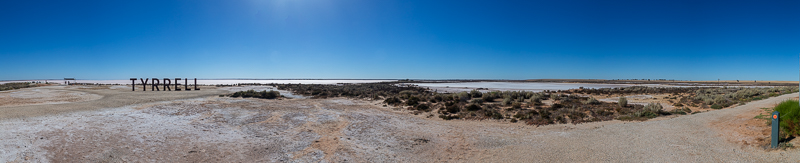
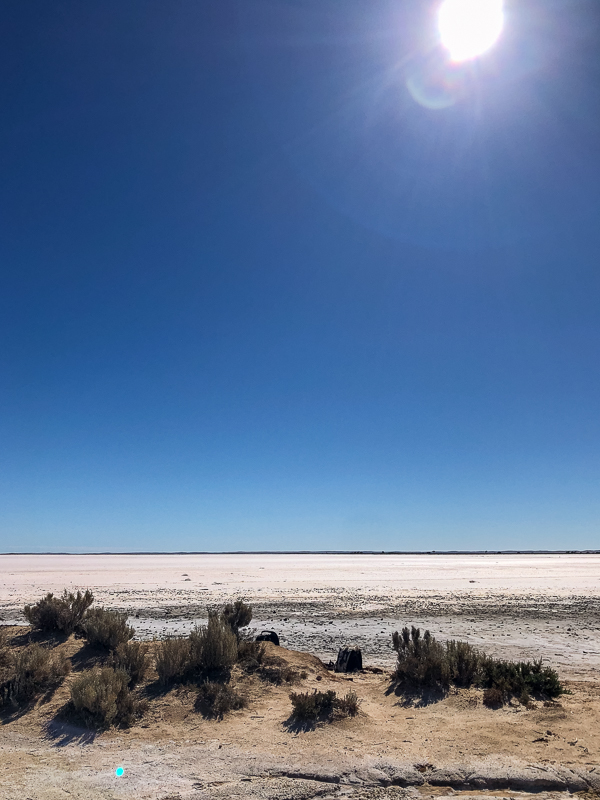
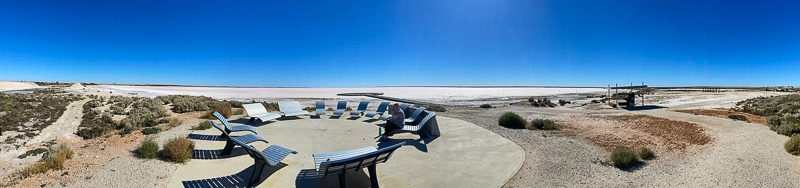
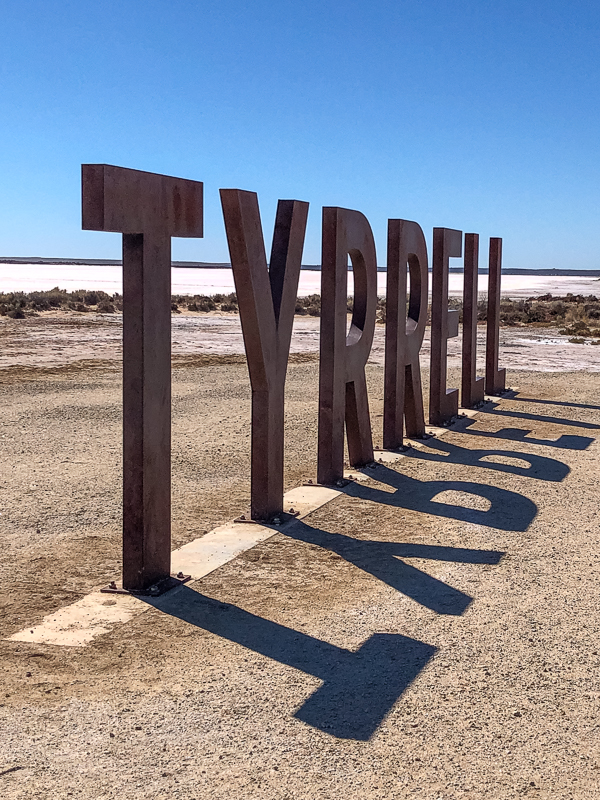
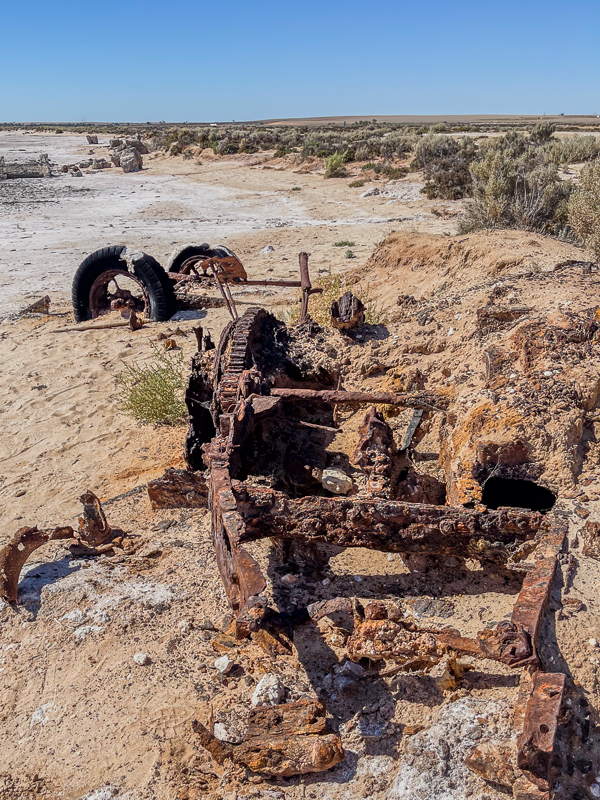
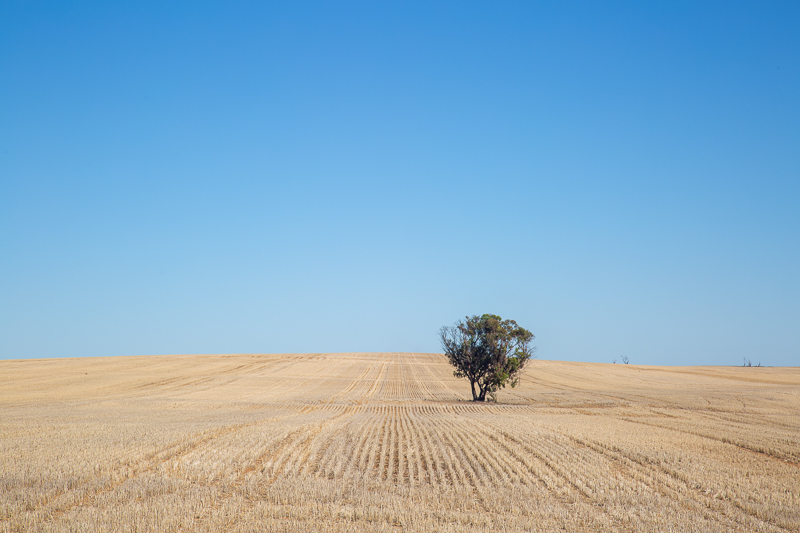
It is Victoria's largest salt lake and one of the state's most distinctive landscape-photography locations.
Unlike a mountain, waterfall or coastal location, Lake Tyrrell has few obvious features competing for attention. Its photographic appeal comes from its simplicity:
salt, shallow water, an almost perfectly flat horizon and an enormous Mallee sky.
Under suitable conditions, shallow water can cover parts of the lake and create the mirror-like reflections for which Lake Tyrrell has become famous.
When the air is calm, the distinction between lake and sky can almost disappear, producing remarkable symmetrical photographs in which clouds, people and sunset colours appear reflected beneath the horizon.
These conditions should not be expected on every visit.
Lake Tyrrell is dry for much of the year, and its appearance varies considerably with rainfall, water depth, temperature, wind and light.
A dry lake presents a different set of photographic opportunities, including:
- Salt crystals and formations.
- Cracked surfaces and patterns.
- Minimalist landscapes.
- Salt-tolerant vegetation.
- Wildlife.
- Abstract details.
- Enormous skies.
Lake Tyrrell is also part of an important Aboriginal cultural landscape. The Wergaia name Direl is associated with the lake, and the surrounding country contains significant Aboriginal cultural heritage.
The Boorong people's knowledge of astronomy is an important part of the cultural heritage associated with Direl, making the relationship between the landscape and the night sky particularly significant.
Visitors should respect all signs, barriers and managed access areas and should not disturb vegetation, archaeological material or other features around the lake.
Viewpoints
Lake Tyrrell differs from many photographic locations because there is no single viewpoint from which every photographer should make the same photograph.
The landscape is extremely flat, and relatively small changes in camera position, foreground, water level and wind can completely alter the composition.
The following areas and approaches provide useful starting points.
Lake Tyrrell Viewing Platform
The established Lake Tyrrell Viewing Platform is the logical starting point for a first visit.
Before carrying equipment farther, use the platform and visitor area to assess:
- Current water levels.
- Wind strength.
- Cloud direction.
- Condition of the lake surface.
- Sunrise or sunset direction.
- Currently permitted access.
The elevated position also provides useful establishing photographs showing the scale and emptiness of the landscape.
Photographic opportunities: wide landscapes, sky, lake conditions, sunset and sunrise colour, documentary photographs and people for scale.
Lake Edge
Where current signs and managed access permit visitors to approach the lake edge, lower camera positions provide a very different interpretation of Lake Tyrrell.
Instead of concentrating entirely on the horizon, look closely at the transition between dry land, vegetation, salt and water.
Photographic opportunities:
- Salt patterns.
- Salt crystals.
- Small pools.
- Reflections.
- Salt and water boundaries.
- Salt-tolerant vegetation.
- Low-angle foreground compositions.
Conditions around a salt lake can change quickly. A surface that appears dry and firm may be soft beneath the crust, particularly after rain.
Reflection Positions
When shallow water is present, the strongest photographic position may be determined by the water rather than by a permanent viewpoint.
Within areas where visitor access is permitted, look for uninterrupted shallow water with a clean horizon.
The classic Lake Tyrrell reflection requires several conditions to occur together:
- Shallow water.
- Very little wind.
- An unobstructed horizon.
- Interesting sky.
- Good light.
Try placing the horizon exactly through the centre of the photograph.
A central horizon that might appear static in a conventional landscape can become very effective when it creates perfect symmetry between the sky and its reflection.
Salt and Texture Positions
When the lake is dry, look for areas where salt formations can provide a strong foreground.
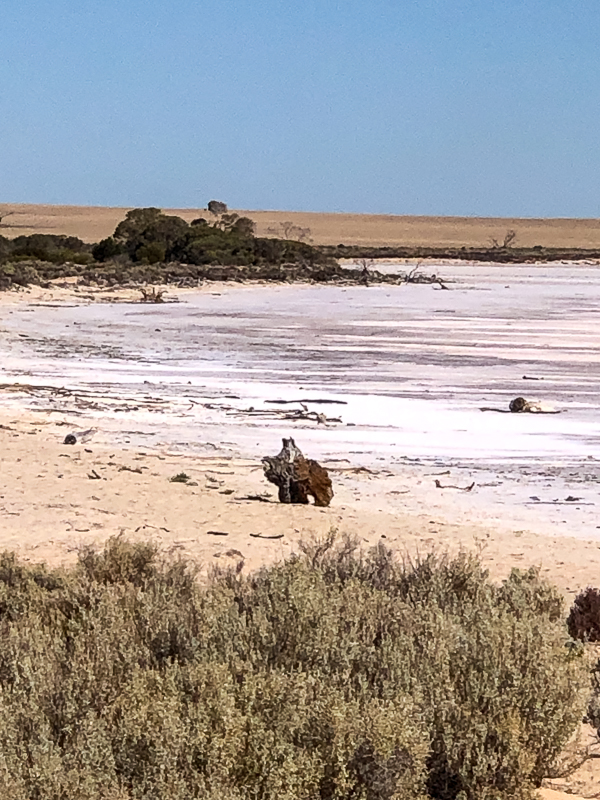

Lowering the camera close to the surface can make relatively small cracks and crystals become significant elements within a wide landscape.
Alternatively, use a longer focal length to isolate patterns and remove the horizon completely.
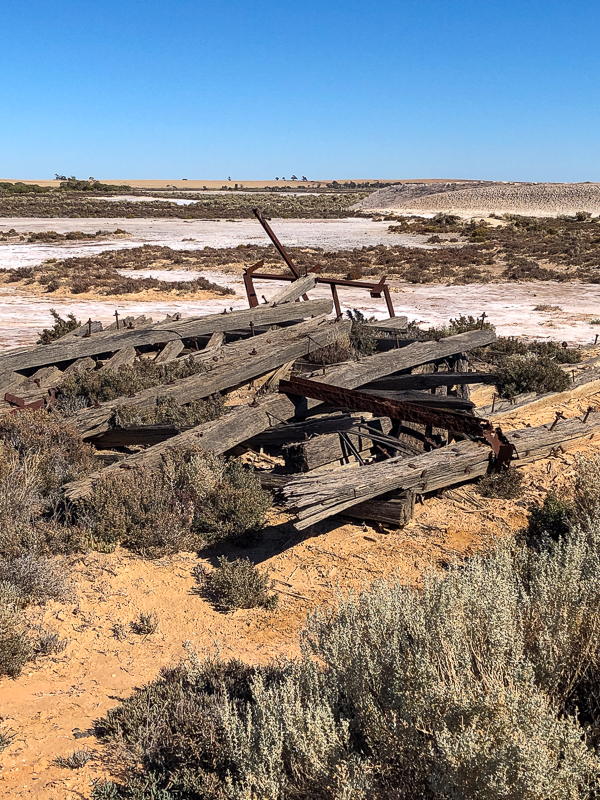
Telephoto Viewpoints
Lake Tyrrell appears to be an obvious wide-angle location, but a telephoto lens can produce some of its most distinctive photographs.
Search the distant landscape for:
- Isolated people.
- Birds.
- Vegetation.
- Colour bands.
- Alternating areas of salt and water.
- Distant reflections.
Telephoto compression can reduce the landscape to a series of simple horizontal bands and produce very effective minimalist images.
Sunset Positions
There is no need to search for a conventional dramatic foreground at Lake Tyrrell.
A successful sunset photograph may contain nothing more than:
- Salt.
- Water.
- A distant horizon.
- A small area of vegetation.
- A single person.
Scout the foreground well before sunset so that the composition has already been established when the strongest colour arrives.
Night-Sky Positions
Lake Tyrrell's enormous open horizon and relatively dark Mallee sky make it an excellent location for night photography.
Scout the exact camera position during daylight. Note that there is a 'Skylounge' specifically designed for laying back and viewing the night sky.
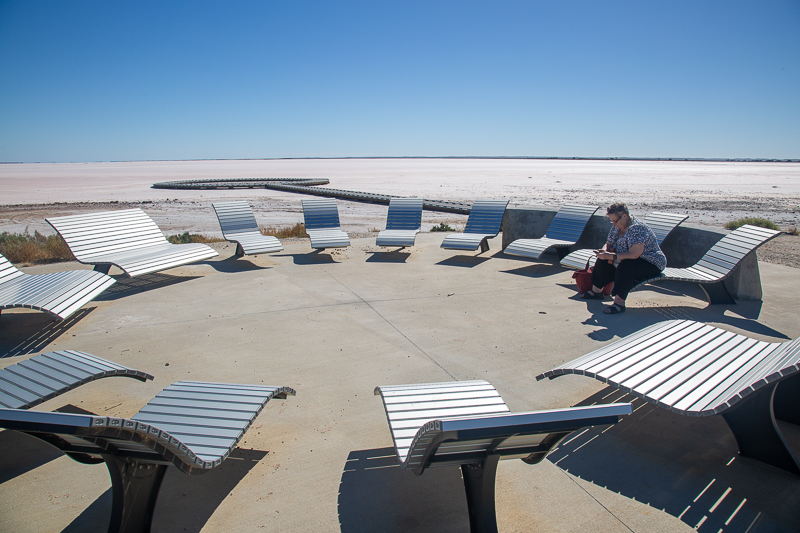
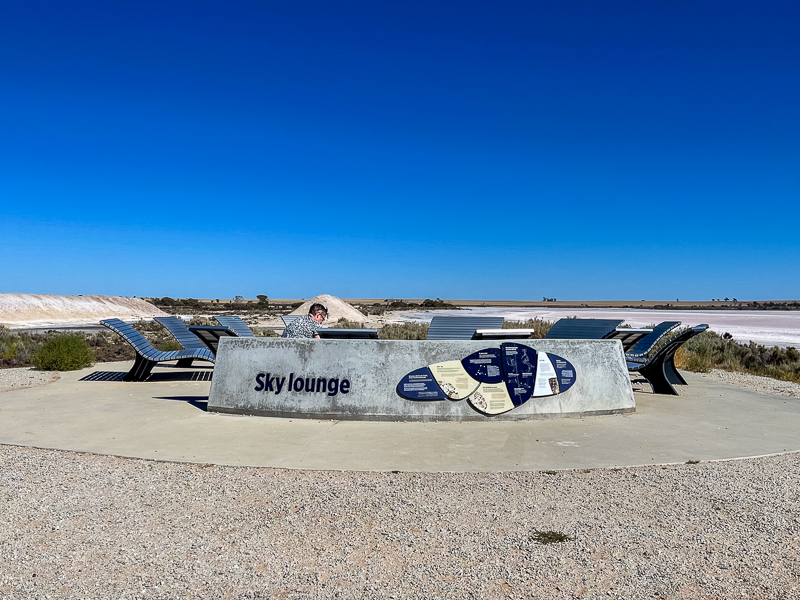
This is particularly important around salt, mud and uneven natural surfaces, which can be difficult to negotiate safely after dark.
Potential subjects include:
- The Milky Way.
- Star fields.
- Star trails.
- Silhouetted vegetation.
- Stars reflected in shallow water.
Google Map - Lake Tyrrell Photographic Viewpoints
The established Lake Tyrrell Viewing Platform is the best starting point for exploring the lake.
Other photographic positions should be selected according to current water levels, signs, visitor access and ground conditions rather than assuming that every part of the lake edge is publicly accessible.
Other Things to Look Out For
How I photographed the Lake Tyrell
What I took - what was in my kit
As Lake Tyrell was not a planned visit (we were on a family holiday), I only took a Canon 5D MkIII along with a 24-105mm lens.
Lake Tyrrell can be photographed successfully with relatively simple equipment, but carrying a range of focal lengths provides considerably more variety than using an ultra-wide lens alone.
Useful equipment includes:
- Wide-angle lens - e.g. 16-35mm for expansive landscapes, reflections and night-sky photography.
- Standard zoom - e.g. 24-70mm for general landscape work and more controlled compositions.
- Telephoto lens - e.g. 70-200mm for minimalist landscapes, distant people, wildlife and compressed layers.
- Tripod for sunrise, sunset, blue hour, panoramas and astrophotography.
- Circular polarising filter, used selectively because polarisation can reduce the reflections that may be the main subject.
- Graduated neutral-density filters or exposure bracketing for balancing bright skies with darker foregrounds.
- Remote release or camera self-timer for long exposures.
- Torch or headlamp for pre-dawn and night photography.
- Long wildlife lens if photographing birds, emus or kangaroos is a priority.
Techniques
The wide panorama's here meant that I used stitched panorama's quite a bit. Unfortunately, the technique that is most associated with this site: reflections, needs some water in the lake. We did not have any.
Reflections
Reflection photography is one of the principal techniques associated with Lake Tyrrell.
When shallow water and calm conditions coincide, position the horizon through the centre of the frame to create deliberate symmetry between the real sky and its reflection.
Avoid automatically using maximum polarisation because this may weaken or remove the reflection.
Long Exposure
A longer exposure can smooth small ripples and simplify the water surface during sunrise, sunset and blue hour.
The technique can also soften moving clouds and strengthen the minimalist character of the landscape.
Use a tripod and, where necessary, a neutral-density filter.
Panoramas
The immense horizontal scale of Lake Tyrrell makes it particularly well suited to panoramic photography.
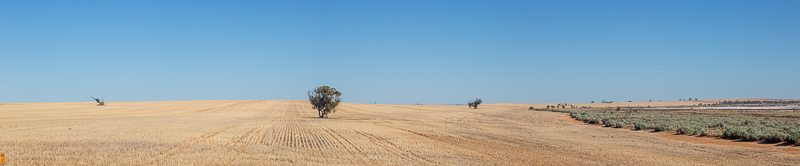
Level the tripod carefully and overlap each frame sufficiently for reliable stitching. Note that the surface of the lake does not give sufficient 'texture' to allow programs to automatically stitch the photos together. Try and include other items in the frame, even if they are edited out afterwards.
A longer focal length can often produce a higher-quality panorama than attempting to capture the complete scene with an extremely wide lens.
Focus Stacking
Focus stacking can be useful when a strong salt formation is positioned very close to the camera but the distant horizon must also remain sharp.
Make several photographs focused progressively from foreground to distance and combine the sharp areas later.
Exposure Bracketing
Sunrise and sunset can create a large brightness difference between the sky and foreground.
Exposure bracketing records several exposures of the same composition, allowing highlight and shadow information to be combined later where necessary.
Astrophotography
Lake Tyrrell is particularly well suited to wide-field astrophotography because of its open horizon and dark Mallee sky.
Scout the foreground in daylight, use a sturdy tripod and focus carefully on the stars before making the final composition.
Where shallow water is present and completely calm, reflected stars can become part of the composition.
Nearby Locations
Salt Crystals
Spend some time looking down rather than towards the horizon.
Salt crystals, cracks and small-scale surface patterns provide excellent detail and abstract photographs.
Salt-Tolerant Vegetation
Small areas of salt-tolerant vegetation can provide both colour and scale within an otherwise sparse landscape.
Look for contrasts between green or reddish vegetation and pale salt.
Cloud Reflections
Broken cloud can be more useful photographically than a completely clear sky.
When shallow water is present, reflected clouds effectively become both the background and foreground of the photograph.
People for Scale
Lake Tyrrell is so large and visually simple that its scale can be difficult to communicate.
A small human figure provides an immediate sense of scale and can become a particularly strong subject when accompanied by a reflection.
Birdlife
Watch the lake margins and surrounding vegetation for birdlife.
A telephoto or wildlife lens allows birds to be photographed without approaching closely or disturbing them.
Emus and Kangaroos
Emus and kangaroos may be encountered in the surrounding Mallee.
Rather than concentrating only on tight wildlife portraits, consider including enough of the landscape to show the animal within its environment.
Moonrise and Moonset
Lake Tyrrell's very low horizon makes it particularly suitable for photographing the rising or setting moon.
A telephoto lens can make the moon a substantial element within an otherwise minimalist landscape.
Abstract Photography
Some of the strongest photographs at Lake Tyrrell may contain no recognisable landscape at all.
Look for:
- Salt geometry.
- Cracks.
- Ripples.
- Colour gradients.
- Reflected clouds.
- Salt and mud boundaries.
- Small areas of vegetation.
Nearby Locations
Lake Tyrrell can easily form part of a longer photographic exploration of the northern Wimmera Mallee. The following locations can be combined with the lake over a day, weekend or longer trip.
Sea Lake
Approximately 7 kilometres south, Sea Lake is the natural base for visiting Lake Tyrrell.
Photographic subjects include the town's streetscape, heritage buildings, agricultural character and public art.
Sea Lake Silo Art and Town Murals
Sea Lake's GrainCorp silos feature a large mural by Drapl and The Zookeeper depicting a girl on a swing overlooking Lake Tyrrell.
The same artists also created smaller murals around the town.
Photographing both the painted interpretation of Lake Tyrrell and the actual landscape provides an interesting connection between public art and the Mallee environment.
Woomelang
Woomelang provides an unusual public-art trail based around small field bins painted with threatened Mallee wildlife.
Other subjects include rural heritage, the town streetscape and the wider Mallee landscape.
Lascelles
Lascelles combines a small Mallee township with striking silo art by Rone.
The restrained monochromatic portraits provide a strong visual contrast with both the colourful Sea Lake mural and the open landscape of Lake Tyrrell.
Patchewollock
Patchewollock offers another combination of silo art, small-town Mallee character and surrounding agricultural landscape.
It can be incorporated into a longer northern section of the Wimmera Mallee Silo Art Trail.
Nullawil
Nullawil's silo artwork provides another worthwhile photographic stop when approaching or leaving the Sea Lake district.
The photorealistic farmer and Kelpie create a very different style of public art from the landscape-based imagery at Sea Lake.
Green Lake
Green Lake provides a contrasting conventional lake environment near Sea Lake.
Depending on current water and weather conditions, opportunities may include open-water landscapes, reflections, birdlife and sunset colour.
Google Map - Lake Tyrrell and Nearby Photographic Locations
The map below provides an overview of Lake Tyrrell and the surrounding northern Wimmera Mallee region.
Location
Lake Tyrrell is approximately 7 kilometres north of Sea Lake in Victoria's Mallee region and approximately 314 kilometres north-west of Melbourne.
Location:
Lake Tyrrell Road
Sea Lake VIC 3533
The established visitor area includes an information bay and viewing platform.
Google Maps: Lake Tyrrell Viewing Platform
Google Map
Use the page content to provide the appropriate Google Map for this location.
How to Get There
From Melbourne
Lake Tyrrell is approximately 314 kilometres north-west of Melbourne.
The usual approach is via the Calder Highway through central and north-western Victoria towards Sea Lake.
Allow approximately four hours of driving, plus stops.
From Sea Lake
Lake Tyrrell is approximately 7 kilometres north of Sea Lake.
Travel north from Sea Lake on the Calder Highway and follow the signposted turn towards the Lake Tyrrell visitor area.
The short distance makes Sea Lake the best base for repeated sunrise, sunset and night-photography visits.
From Swan Hill
Swan Hill provides the nearest major regional centre and is a useful alternative base for photographers combining Lake Tyrrell with locations around the Murray River and Lake Boga.
Allow approximately one hour for the drive between Swan Hill and Sea Lake, depending on the route and current road conditions.
By Train
Swan Hill is the nearest major railway terminus with regular passenger rail services from Melbourne.
Lake Tyrrell is not conveniently reached from the station without onward road transport, so visitors arriving by train will normally require a hire car or other transport for the remainder of the journey.
Caravans, Motorhomes and Large Rigs
Visitors travelling with caravans, motorhomes or larger recreational vehicles should remain on established roads and use designated parking areas.
The salt lake itself should never be used for parking, turning or vehicle access.
For photographers staying locally, leaving a caravan or larger motorhome at the accommodation and visiting the lake in a smaller vehicle provides greater flexibility around sunrise, sunset and after dark.
The established Lake Tyrrell visitor area currently includes an information bay and viewing platform.
Visitors are instructed to keep vehicles on designated roads.
Conditions around the lake can vary considerably following rain.
A salt surface that appears completely dry may conceal soft mud beneath a thin crust.
Before travelling, check:
- Recent rainfall.
- Local road conditions.
- Current signs and barriers.
- Weather forecasts.
- Wind forecasts if reflection photography is a priority.
Respect all temporary closures and access restrictions.
Current Access / Conditions
There are no known issues with getting to this location.
Best Time to Visit
There is no single guaranteed best month for photographing Lake Tyrrell.
Its appearance is strongly influenced by water levels, rainfall, wind, temperature and light.
For Reflections
The famous mirror effect requires shallow water and very little wind.
Calm conditions around sunrise can be particularly productive.
Recent rainfall does not guarantee ideal conditions, so current local information is useful before making a trip specifically for reflections.
When the Lake is Dry
Dry conditions expose salt formations and surface patterns that may be hidden when water is present.
Concentrate on texture, abstraction and minimalist compositions rather than trying to reproduce the familiar reflection photographs.
Sunrise
Sunrise is one of the highest-priority photographic periods.
Advantages can include:
- Pastel colour.
- Lower-angle light.
- Potentially calmer wind.
- Fewer visitors.
- A transition from stars through blue hour into daylight.
Arrive before first light.
Sunset
Sunset is equally valuable and often provides stronger warm colour.
Arrive early enough to find the strongest foreground before the light changes rapidly.
Blue Hour
Continue photographing after sunset.
During blue hour, the lake and sky can take on very similar tones, particularly when shallow water is present.
Night
Lake Tyrrell is particularly well suited to night-sky photography.
Moon phase should be considered when planning the visit.
A darker moon phase is generally preferable for Milky Way photography, while moonlight can be useful when the objective is to illuminate the foreground landscape.
Accessibility
The broad Lake Tyrrell landscape can be appreciated without undertaking a long bushwalk.
The established visitor area and viewing platform provide expansive views close to the parking area.
This makes it possible to make worthwhile landscape photographs without walking long distances or climbing steep terrain.
Conditions become more difficult away from the formal visitor area.
Photographers may encounter:
- Gravel.
- Uneven natural surfaces.
- Salt crust.
- Soft mud.
- Wet or slippery ground.
- Low vegetation.
Photographers using wheelchairs or mobility aids should distinguish between access to the established viewing facilities and access to informal positions near the lake surface.
Do not assume that the salt surface itself is suitable for mobility aids.
Where to Stay
Sea Lake is the preferred base for Lake Tyrrell.
Swan Hill provides a much larger range of accommodation and services and is useful when Lake Tyrrell forms part of a wider Murray-Mallee photographic trip.
Sea Lake
Staying in Sea Lake allows photographers to return easily for sunset, night photography and sunrise.
Lake Tyrrell Accommodation
Address: 97 Railway Avenue, Sea Lake VIC 3533
Telephone: (03) 5070 1000
Website:
Lake Tyrrell Accommodation
Motel-style accommodation in Sea Lake, convenient for repeated visits to Lake Tyrrell.
Sea Lake Motel
Address: 93 Railway Avenue, Sea Lake VIC 3533
Telephone: 0418 487 188
Website:
Sea Lake Motel
Motel accommodation on the Calder Highway within Sea Lake.
Sea Lake Recreation Reserve Caravan Park
Address: Calder Highway, Sea Lake VIC 3533
Telephone: 0472 547 705
Website:
Sea Lake Recreation Reserve Caravan Park
The park provides powered and unpowered sites and cabins and is listed as RV friendly.
Visitors with particularly large caravans or motorhomes should confirm current site dimensions, turning space and access before arrival.
Swan Hill
Swan Hill is a larger regional centre with a much wider range of shops, restaurants, fuel and accommodation.
It is particularly useful when combining Lake Tyrrell with Murray River, Lake Boga and other northern Victorian photographic locations.
BIG4 Swan Hill
Address: 186 Murray Valley Highway, Swan Hill VIC 3585
Telephone: (03) 5032 4372
Website:
BIG4 Swan Hill
Offers cabins and caravan/camping sites and can be useful for visitors travelling with caravans, campers or motorhomes.
BIG4 Riverside Swan Hill
Address: 1 Monash Drive, Swan Hill VIC 3585
Telephone: (03) 5032 1494
Website:
BIG4 Riverside Swan Hill
Riverside accommodation with self-contained accommodation, caravan and camping options.
Photography Recommendations
Wide-Angle Lens - e.g. 16-35mm
A wide-angle lens is particularly useful for:
- Expansive landscapes.
- Large skies.
- Foreground salt patterns.
- Symmetrical reflections.
- Milky Way photography.
Take care not to make distant subjects so small that the photograph loses its focal point.
Standard Zoom - e.g. 24-70mm
A standard zoom is probably the most versatile general-purpose lens at Lake Tyrrell.
It allows the photographer to move easily between broad landscapes and more selective compositions.
Telephoto Lens - e.g. 70-200mm
A telephoto lens is strongly recommended.
Use it for:
- Minimalist landscapes.
- Distant people.
- Compressed layers.
- Birdlife.
- Vegetation.
- Moonrise and moonset.
- Abstract colour bands.
Tripod
A tripod is highly recommended for:
- Sunrise.
- Sunset.
- Blue hour.
- Night photography.
- Long exposures.
- Panoramas.
- Precisely aligned reflections.
Circular Polarising Filter
A polarising filter can reduce glare and improve colour, but should be used cautiously.
Reflections may be the principal subject, and excessive polarisation can weaken them.
Neutral-Density and Graduated Filters
Neutral-density filters can extend shutter speeds where smoother water or cloud movement is desired.
The exceptionally straight horizon also makes Lake Tyrrell well suited to graduated neutral-density filters for balancing a bright sky against a darker foreground.
Wildlife Lens
A longer telephoto lens can be useful for photographing birds, emus and kangaroos without approaching closely.
Drone Photography
From above, salt, water and vegetation may form patterns that cannot be appreciated from ground level.
Before flying a drone, check current CASA requirements, airspace, land-manager restrictions, cultural considerations and wildlife conditions.
Do not assume that take-off and landing are permitted simply because the landscape appears remote.
Where drone photography is legal and appropriate, concentrate on:
- Salt patterns.
- Water channels.
- Shoreline geometry.
- Colour variations.
- Abstract compositions.
Protecting Camera Equipment
Salt is highly corrosive.
Avoid placing camera bags and other equipment directly onto wet salt or saline mud.
After the visit, clean salt residue from tripod legs, feet, camera plates, filters, footwear and anything else that has contacted the salt surface.
Suggested Photographic Sequence
-
Arrive during the afternoon.
Visit the viewing area and assess water, wind, cloud and current access. -
Scout before unpacking all the equipment.
Identify the strongest foregrounds and potential sunset positions. -
Make the establishing photographs.
Record the scale of the lake and surrounding Mallee landscape. -
Photograph the details.
Look for salt, cracks, vegetation, water boundaries and abstract patterns. -
Use the telephoto lens.
Search for distant people, wildlife and compressed landscape layers. -
Make a panorama.
The extremely wide horizon is particularly well suited to a multi-frame panoramic photograph. -
Move into the sunset position.
Have the principal composition ready before the strongest colour develops. -
Photograph sunset.
Prioritise reflections if shallow water and calm wind coincide. -
Continue through the afterglow.
Some of the strongest colour may occur after the sun has disappeared. -
Photograph blue hour.
Watch for the lake and sky becoming increasingly similar in tone. -
Begin night photography.
Use positions that were scouted safely during daylight. -
Photograph the Milky Way or stars.
Include reflections when suitable shallow water and calm conditions are present. -
Return before dawn.
Be in position while the sky is still dark. - Photograph the transition from stars into blue hour.
-
Photograph sunrise.
Early morning may provide calmer wind and stronger reflections than the previous evening. -
Finish with wildlife and detail photography.
Once the best light has passed, search for birds, vegetation, salt and other smaller subjects.
How Long Should a Photographer Stay?
A casual visitor could see Lake Tyrrell in approximately 30-45 minutes.
A photographer should allow considerably longer.
Allow approximately 2-3 hours for a dedicated sunrise or sunset session.
For sunset, afterglow, blue hour and night photography, allow approximately 4-5 hours.
A photographer visiting Lake Tyrrell for the first time should consider staying at least one night in Sea Lake.
Two nights are preferable when Lake Tyrrell is one of the main photographic objectives of the trip.
Two nights provide:
- Two sunset opportunities.
- Two sunrise opportunities.
- A night-sky session.
- A second chance if wind prevents reflections.
- Time for detailed and telephoto photography.
- Time to explore Sea Lake and other nearby locations.
My Priority Photographs
- Wide establishing photograph showing the scale of Lake Tyrrell.
- Lake Tyrrell beneath an enormous Mallee sky.
- Perfectly symmetrical reflection with the horizon centred, if conditions permit.
- Small person and complete reflection for scale.
- Minimalist salt, horizon and sky composition.
- Strong salt-pattern foreground with a wide-angle lens.
- Close salt-crystal detail.
- Cracked salt surface.
- Salt and vegetation colour contrast.
- Telephoto compression of salt, water and sky.
- Isolated distant person with a telephoto lens.
- High-resolution panoramic landscape.
- Sunset reflection.
- Post-sunset colour.
- Blue-hour landscape or reflection.
- Milky Way over Lake Tyrrell.
- Stars reflected in shallow water if conditions permit.
- Pre-dawn blue-hour landscape.
- Sunrise reflection.
- Moonrise or moonset if timing is suitable.
- Birdlife.
- Emus or kangaroos within the Mallee landscape if encountered.
- Abstract salt and water patterns.
- Viewing platform and visitor area as part of the location record.
- Cultural and interpretive signage.
- Aerial salt and water patterns only where drone operation is legal, permitted and environmentally appropriate.
Suggested Photographic Sequence
Work through the location in an order that makes the best use of changing light and conditions.
How Long Should a Photographer Stay?
Allow enough time to photograph the location in more than one light or weather condition where practical.
My Priority Photographs
Use this section for the practical photographic shot list for the location.