Photographing Cradle Mountain / Dove Lake
About Cradle Mountain / Dove Lake
Cradle Mountain / Dove Lake is a distinctive photographic destination in Cradle Mountain–Lake St Clair National Park, Tasmania. Its strongest images combine the defining landscape or built character with changing light, weather and small details that establish a sense of place.
The location rewards a deliberate sequence rather than a single record photograph. Begin with context, then isolate textures, human traces, vegetation or wildlife, and return to the principal view when the light improves.
This is Tasmanian Aboriginal Country. Respect cultural values, signs, private property, wildlife and other visitors.
Viewpoints
-
Dove Lake - Classic Cradle Mountain View
Dove Lake provides the classic view of Cradle Mountain and should be regarded as the essential first photographic location.
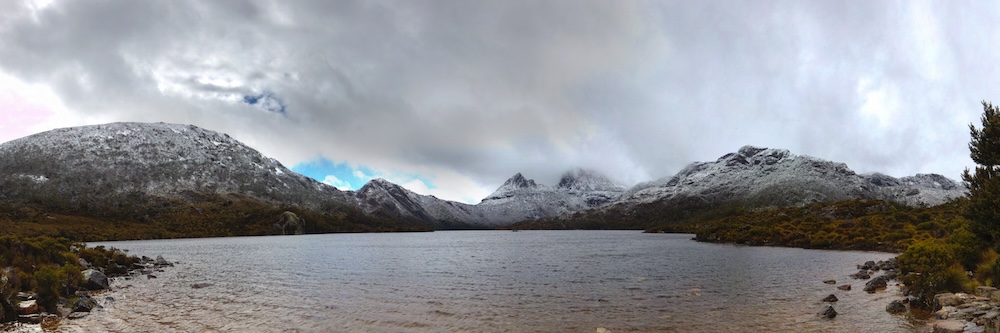
Snow capped Cradle Mountain with Dove Lake The glacial lake lies immediately below the mountain. During calm conditions its dark water can produce an almost perfect reflection of the jagged peaks.
Best for: Cradle Mountain, reflections, sunrise, snow, mist, dramatic weather and wide landscapes.
Best light: sunrise and early morning, although rapidly changing cloud can produce excellent conditions at any time.
Walk difficulty / distance: very little walking is required to reach the principal Dove Lake viewing area from the shuttle stop. The complete Dove Lake Circuit is Grade 3, 6 km and approximately 2-3 hours before allowing additional time for photography.
Accessibility: excellent views can be obtained without walking the full circuit. The Dove Lake Viewing Shelter is wheelchair accessible and includes accessible toilets.
Photography tip: arrive well before your intended photograph. Cradle Mountain frequently disappears behind cloud and then reappears for only a few minutes.
A 16-35mm lens is excellent for foreground-led landscapes, while a 24-70mm often gives a stronger, less distant rendering of the mountain.
-
The historic timber boatshed on Dove Lake is one of Tasmania's most frequently photographed foreground subjects.
Its simple weathered form provides a useful human-scale element against the much larger mountain landscape.
Best for: classic Cradle Mountain landscapes, sunrise, reflections, snow and atmospheric weather.
Best light: sunrise and early morning.
Walk difficulty / distance: reached by walking a relatively short section of the Dove Lake Circuit from the Dove Lake shelter. Allow approximately 15-20 minutes each way, depending on pace and track conditions.
The track uses natural surfaces and boardwalk and is not suitable for a conventional wheelchair.
Photography tip: do not automatically use the widest lens available. A moderate focal length can make Cradle Mountain appear much larger behind the boatshed.
-
Glacier Rock provides one of the best elevated viewpoints over Dove Lake without requiring a major alpine walk.
The viewpoint looks across the lake towards Cradle Mountain and provides a higher perspective than the main visitor shelter.
Best for: elevated Dove Lake landscapes, mountain reflections and panoramic compositions.
Walk difficulty / distance: short section of the Grade 3 Dove Lake Circuit. Expect uneven natural surfaces, inclines and steps.
Accessibility: not wheelchair accessible and unsuitable for visitors who have difficulty negotiating uneven rocky surfaces.
Photography tip: a 24-70mm lens is particularly useful because the elevated position already provides a broad view of the lake.
-
Ballroom Forest is one of the most attractive rainforest sections on the Dove Lake Circuit and provides a complete change from the exposed alpine scenery.
Myrtle beech, moss-covered trunks, roots, fungi and dense green vegetation create excellent opportunities for intimate landscape photography.
Best for: rainforest, moss, fungi, tree details and atmospheric woodland images.
Best conditions: rain, mist and overcast weather.
Walk difficulty / distance: forms part of the Grade 3, 6 km Dove Lake Circuit. Reaching it requires a substantial section of the circuit.
Photography tip: a polarising filter is extremely useful after rain because it reduces reflections on wet leaves and makes moss appear richer.
-
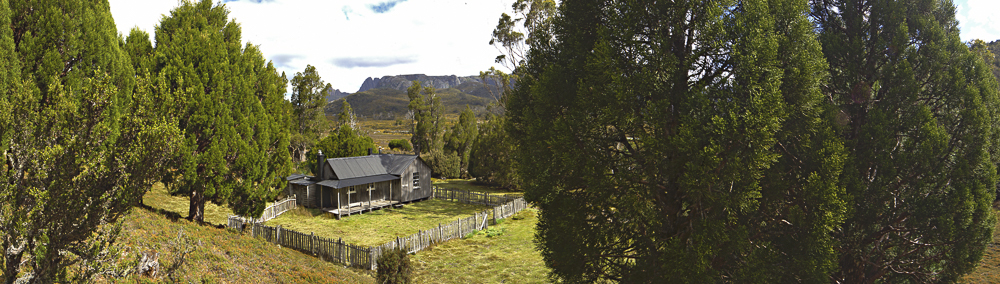
Cradle Mountain's Ronny Hut Ronny Creek is one of the best locations in Cradle Valley for photographing common wombats.
The open buttongrass plains provide a very different landscape from Dove Lake and also allow wildlife to be photographed within its natural environment.
Wallabies, pademelons and a variety of birds may also be encountered.
Best for: wombats, wildlife, buttongrass, environmental portraits and mountain landscapes.
Best light: early morning and late afternoon.
Walk difficulty / distance: very little walking is required to begin photographing from the area surrounding the shuttle stop. Longer boardwalk and track sections can be followed if desired.
Accessibility: one of the better choices for visitors who cannot undertake long walks, although individual tracks extending from the stop become less accessible.
Recommended lens: 70-200mm for environmental portraits and 100-500mm for tighter wildlife photographs.
Never approach, feed or touch wildlife.
-
Crater Lake is a classic glacial cirque lake surrounded by steep slopes and alpine vegetation.
It provides a darker and more enclosed landscape than Dove Lake and is especially attractive when cloud or mist moves through the surrounding ridges.
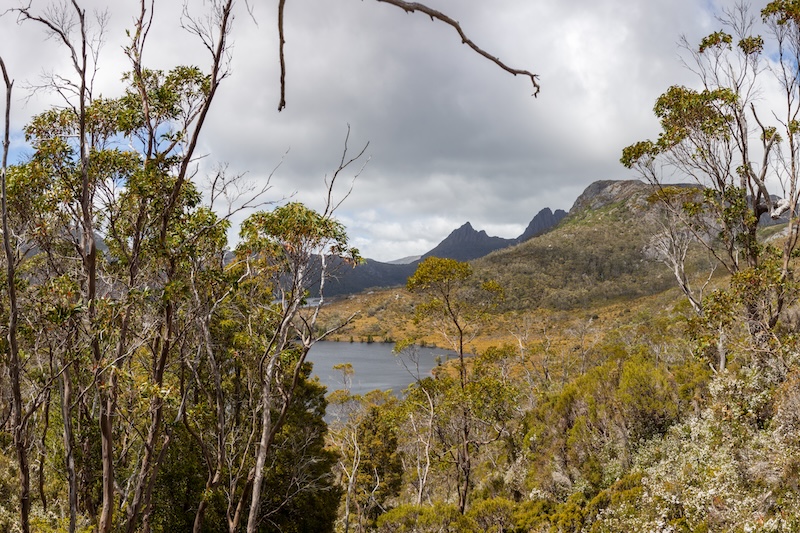
Crater Lake Canon 5DMkII, EF24-105mm @ 32mm, Manual, F8, 1/160th, ISO100 (original 198MPix). Best for: alpine lakes, reflections, fagus, mist, snow and intimate mountain landscapes.
Best light: soft morning or afternoon light, although overcast conditions can be excellent.
Walk difficulty / distance: Grade 3, approximately 5.7 km circuit and around 2 hours. Parts of the route are steep.
Accessibility: not suitable for wheelchairs or people with significant walking difficulties.
Photography tip: autumn is particularly interesting when fagus changes colour around the alpine landscape.
-
Wombat Pool is a small alpine lake on the Crater Lake route and provides a quieter photographic subject than nearby Dove Lake.
Reflections of surrounding vegetation can be attractive in calm conditions, while autumn fagus provides additional colour.
Best for: reflections, fagus, alpine vegetation and intimate landscapes.
Walk difficulty / distance: reached as part of the Grade 3 Crater Lake circuit. Uneven surfaces, slopes and steps should be expected.
Photography tip: a 70-200mm lens works extremely well for isolating sections of reflected vegetation.
-
Lake Lilla is another small glacial lake lying between Dove Lake and Crater Lake.
Its smaller scale provides opportunities for quieter landscape compositions incorporating shoreline vegetation, reflections and surrounding ridges.
Best for: reflections, alpine vegetation, mist and intimate landscapes.
Walk difficulty / distance: reached on the Grade 3 Crater Lake route; expect uneven and occasionally steep walking.
-
Marion's Lookout provides one of the finest elevated photographic viewpoints in the Cradle Mountain area.
From the lookout, photographers can look across Dove Lake, Crater Lake and the surrounding alpine landscape towards Cradle Mountain.
Best for: panoramic landscapes, alpine lakes, Cradle Mountain, dramatic clouds and sunset.
Walk difficulty / distance: strenuous alpine walking. Several approaches are possible. The route from Ronny Creek via Crater Lake includes a very steep final ascent to the lookout.
Accessibility: unsuitable for wheelchairs or people with substantial walking difficulties. Good mobility, footwear and fitness are required.
Photography tip: take both a wide-angle and a telephoto. A 70-200mm can be especially effective for separating the lakes and ridgelines into layered compositions.
Weather exposure is considerably greater here than at Dove Lake. Do not continue if conditions become unsafe.
-
The summit is the most demanding photographic viewpoint included on this page and should be attempted only by suitably prepared walkers in appropriate weather.
At 1,545 metres, the summit provides extensive views across the Tasmanian Wilderness World Heritage Area.
Best for: high alpine panoramas, dramatic geology, distant mountain ranges and wilderness landscapes.
Walk difficulty / distance: Grade 5, approximately 12.8 km return, around 8 hours and approximately 600 metres of climbing.
The upper section requires negotiating large rocks and boulder scrambling.
Accessibility: suitable only for experienced and properly equipped walkers. It is not appropriate for people with significant mobility limitations or a strong discomfort with exposure.
Photography tip: minimise equipment weight. A single high-quality 24-70mm or lightweight wide-angle zoom is often more practical than carrying a full landscape kit.
Do not attempt the summit when it is covered in snow or when severe weather is forecast.
-
Waldheim Chalet and Weindorfers Forest
Waldheim provides one of the best opportunities to combine Cradle Mountain's natural landscape with its human history.
The reconstructed chalet stands among ancient rainforest and commemorates the work of Gustav and Kate Weindorfer in promoting the protection of Cradle Mountain.
Best for: historic architecture, rainforest, moss, pandani, fungi and atmospheric photography.
Walk difficulty / distance: approximately 100 metres / Grade 2 to Waldheim Chalet. The adjoining Weindorfers Forest Walk is a 750 metre Grade 2 circuit.
Best conditions: overcast, rain or mist.
Photography tip: this is an excellent location when cloud completely obscures Cradle Mountain. Rain actually improves the colour and texture of the forest.
-
Pencil Pine Falls and Rainforest Walk
Pencil Pine Falls is one of the easiest accessible photographic locations in Cradle Valley.
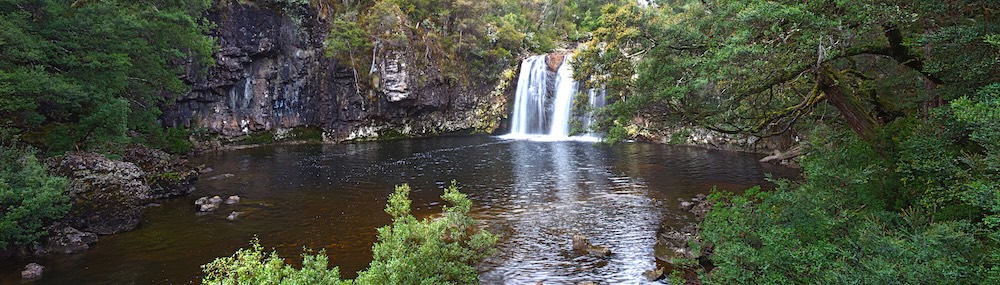
Knyvet Falls on Pencil Pines Walk A short boardwalk passes through pencil pine and myrtle rainforest before providing views of the waterfall.
Best for: waterfalls, rainforest, moss, wet foliage, fungi and long exposures.
Walk difficulty / distance: Grade 1, 431 metres, approximately 10 minutes. The surface is flat and even with no steep sections.
Accessibility: suitable for wheelchair users with assistance.
Photography tip: use a polarising filter to remove glare from wet rocks and vegetation. A tripod allows exposures in the 1/4 to 2 second range to soften the water.
-
The Enchanted Walk follows Pencil Pine Creek through a wonderfully mossy section of rainforest close to the park entrance.
Best for: rainforest, streams, fungi, moss, pademelons, wombats and intimate landscapes.
Best conditions: overcast, mist or rain.
Walk difficulty / distance: approximately 1.1 km / Grade 2.
Accessibility: the first half is sealed and wheelchair accessible. Beyond the bridge there are a number of steps, so the complete circuit is not suitable for conventional wheelchairs.
Photography tip: colourful fungi become particularly interesting during the colder months. A macro lens can be very worthwhile.
Other Things to Look Out For
How I photographed Cradle Mountain
What I took - what was in my kit
I took my LowePro Backpack loaded with Canon 5DMkII body, Canon 24-105mm zoom, Manfrotto 190 Tripod, and of course a range of lens wipes, spare batteries, sunscreen and bug repellant. I tended to shoot 28-55mm
Techniques
TBD
Nearby Locations
Nearby photographic locations
Location
Cradle Mountain / Dove Lake, Cradle Mountain–Lake St Clair National Park, Tasmania
Approximate coordinates: -41.10670, 145.94700
Markers identify photographic objectives rather than guaranteed parking spaces or open access.
Apple Map – Photographic Locations
This Apple Map shows the principal subject and nearby photographic locations. Verify signs, road status and track conditions before relying on a marker for access.
Photographic locations
How to Get There
Driving from Devonport
Devonport is one of the most convenient starting points for Cradle Mountain, particularly for travellers arriving from mainland Australia with their own vehicle.
The usual route travels through the Sheffield area before climbing into Cradle Valley.
Devonport to Cradle Mountain driving directions
Driving from Launceston
Cradle Mountain can be reached from Launceston via Deloraine and the north-western highlands.
Allow considerably more time during snow, heavy rain or fog because the final roads are narrow and winding.
Launceston to Cradle Mountain driving directions
Driving from Hobart
Cradle Mountain is a substantial drive from Hobart and is better treated as an overnight or multi-day destination rather than a day trip.
Hobart to Cradle Mountain driving directions
From mainland Australia by ferry
Visitors bringing their own car, caravan or camper from mainland Australia can travel aboard the Spirit of Tasmania between Geelong and Devonport, then continue by road to Cradle Mountain.
Cradle Mountain Shuttle Bus
The park shuttle is an important part of visiting Cradle Mountain.
The shuttle travels between:
- Cradle Mountain Visitor Centre
- Interpretation Centre / Ranger Station
- Snake Hill
- Ronny Creek
- Dove Lake
The journey from the Visitor Centre to Dove Lake takes approximately 20 minutes.
Shuttle operating hours vary throughout the year, and weather can affect operations.
During shuttle operating periods, private vehicles are not permitted to enter Dove Lake Road.
Current Cradle Mountain Shuttle Information
Driving from the State Capital
The state capital is used as a consistent reference point. Apple Maps calculates the automobile route to this location; your actual route may vary with your starting point, traffic, roadworks and temporary closures.
State capital to destination
Calculating the driving route with Apple Maps…
Distance and travel time are Apple Maps estimates and may change with the route and current conditions.
Current Access / Conditions
Conditions checked: 22 September 2026.
Check Tasmania Parks alerts and Tasmania Police road information before travel. Alpine weather, ice, snow, fire and maintenance can alter access rapidly.
A valid parks pass is required where the site is within a national park. At Cradle Mountain, private vehicle access beyond the visitor centre is restricted during shuttle operating hours and parking is limited.
Best Time to Visit
Autumn - March to May
Autumn is one of the outstanding photographic seasons at Cradle Mountain.
Tasmania's deciduous beech, Nothofagus gunnii, commonly called fagus, changes from green through gold and orange to deep rust red.
Fagus colour generally reaches its peak around late April, although exact timing varies according to altitude and weather.
Crater Lake and the Dove Lake area are among the best places to include fagus in alpine landscape photographs.
Good for: fagus, mist, rainforest, reflections and wildlife.
Winter - June to August
Winter offers the greatest chance of photographing Cradle Mountain covered in snow.
Snow and dark storm clouds can transform Dove Lake, while wet rainforest around Waldheim and Pencil Pine Falls becomes intensely colourful.
Winter also brings significantly greater risks from snow, ice, wind and rapidly deteriorating weather.
Good for: snow, storms, rainforest, waterfalls and atmospheric mountain photography.
Spring - September to November
Spring combines changing alpine weather with new vegetation and active wildlife.
Snow can remain on the higher peaks during early spring, while wombats and other wildlife around Ronny Creek provide excellent photographic opportunities.
Good for: wildlife, waterfalls, fresh vegetation, snow remnants and mountain landscapes.
Summer - December to February
Summer provides the longest daylight hours and generally the most comfortable conditions for longer walks such as Marion's Lookout and the Cradle Mountain Summit.
The principal disadvantage for photographers is the very early sunrise and larger visitor numbers.
Good for: longer walks, alpine landscapes, wildflowers and extended evening light.
Best overall photographic period
For a first dedicated photographic visit I would choose mid to late April.
This provides the possibility of:
- Autumn fagus colour
- Misty rainforest
- Changing alpine weather
- Occasional early snow on the peaks
- Wombat and wildlife photography
- More convenient sunrise times than summer
Tasmania Parks and Wildlife Service advises that fagus colour commonly peaks around Anzac Day, 25 April and may remain colourful for several weeks.
Accessibility
Two-Wheel-Drive Vehicle Access
Cradle Mountain can normally be reached in a standard two-wheel-drive passenger vehicle.
The normal visitor roads are sealed and a four-wheel-drive vehicle is not required.
Conditions can nevertheless become difficult during snow, ice, heavy rain or severe weather, so check road conditions before travelling during winter.
Private Cars on Dove Lake Road
Private vehicle access into the national park is restricted during shuttle operating hours.
Outside shuttle hours, limited private vehicle access towards Dove Lake may be available. Parking at Dove Lake is extremely limited, with only a small number of spaces.
Vehicles already inside the park when the shuttle begins operating may leave during the day, but must follow the relevant shuttle-bus traffic procedures.
Caravans, Campervans, Motorhomes and Trailers
Campervans, motorhomes, caravans, trailers and similar vehicles are prohibited on Dove Lake Road at all times.
Travellers towing a caravan should leave the caravan or complete rig in the appropriate Visitor Centre parking area and continue into the park by shuttle bus.
This restriction applies even outside normal shuttle operating hours.
Wheelchair Access
The Cradle Mountain Gateway and Visitor Centre are modern and fully accessible.
The current shuttle fleet includes purpose-built low-floor wheelchair-accessible buses.
Accessible facilities are provided at important stops, including the Dove Lake Viewing Shelter.
The Dove Lake car park also includes a designated disability parking space for periods when private vehicle access is permitted.
Best Photographic Locations for Limited Mobility
- Dove Lake Viewing Shelter — one of the best choices. Provides the classic Cradle Mountain landscape with very little walking.
- Pencil Pine Falls and Rainforest Walk — Grade 1, 431 metres and suitable for wheelchair users with assistance.
- Rainforest Walk at the Interpretation Centre — all-weather boardwalk suitable for most independent wheelchair users.
- Enchanted Walk — the first half is sealed and wheelchair accessible. Steps prevent wheelchair access around the full circuit.
- Ronny Creek — worthwhile buttongrass and wildlife photography is possible close to the shuttle stop.
TrailRider
Tasmania Parks and Wildlife Service provides a TrailRider all-terrain wheelchair at Cradle Mountain.
The TrailRider can allow people with impaired mobility to use selected tracks that are inaccessible to conventional wheelchairs.
At least two reasonably fit assistants are required on easier tracks, with additional helpers required for more difficult terrain.
Use is free, but advance booking through the Cradle Mountain Visitor Centre is required.
Accessibility Summary
Standard 2WD vehicle: Yes.
4WD required: No for the normal visitor areas.
Caravan or trailer to Visitor Centre: Yes.
Caravan or trailer on Dove Lake Road: No.
Motorhome or campervan on Dove Lake Road: No.
Wheelchair-accessible shuttle: Yes.
Accessible Dove Lake viewpoint: Yes.
Accessible toilets at Dove Lake: Yes.
Wheelchair-accessible rainforest: Yes, particularly the Rainforest Walk near the Interpretation Centre.
Suitable for people with limited walking ability: Yes. Several excellent photographic locations can be reached by shuttle with only minimal walking.
Where to Stay
Waldheim Cabins
Waldheim Cabins provide the closest accommodation to the heart of Cradle Valley and are particularly attractive for photographers wanting immediate access to rainforest and wildlife.
The accommodation is deliberately simple and is situated within the national park.
Peppers Cradle Mountain Lodge
Peppers Cradle Mountain Lodge
4038 Cradle Mountain Road
Cradle Mountain TAS 7306
A premium accommodation choice surrounded by woodland close to the park entrance.
Its location makes it particularly convenient for photographers making repeated dawn and late-afternoon visits into Cradle Valley.
Cradle Mountain Hotel
Cradle Mountain Hotel
3718 Cradle Mountain Road
Cradle Mountain TAS 7306
A comfortable hotel close to the national park and home to the Cradle Mountain Wilderness Gallery.
Discovery Resorts - Cradle Mountain
Discovery Resorts - Cradle Mountain
Cradle Mountain Road
Cradle Mountain TAS
This is one of the most useful options for visitors travelling with a caravan, motorhome or camper.
Cabins and caravan/camping facilities are available close to the national park entrance.
This location is particularly practical because caravans and motorhomes cannot be taken along Dove Lake Road.
Discovery Resorts - Cradle Mountain
Best time to visit
Autumn - March to May
Autumn is one of the outstanding photographic seasons at Cradle Mountain.
Tasmania's deciduous beech, Nothofagus gunnii, commonly called fagus, changes from green through gold and orange to deep rust red.
Fagus colour generally reaches its peak around late April, although exact timing varies according to altitude and weather.
Crater Lake and the Dove Lake area are among the best places to include fagus in alpine landscape photographs.
Good for: fagus, mist, rainforest, reflections and wildlife.
Winter - June to August
Winter offers the greatest chance of photographing Cradle Mountain covered in snow.
Snow and dark storm clouds can transform Dove Lake, while wet rainforest around Waldheim and Pencil Pine Falls becomes intensely colourful.
Winter also brings significantly greater risks from snow, ice, wind and rapidly deteriorating weather.
Good for: snow, storms, rainforest, waterfalls and atmospheric mountain photography.
Spring - September to November
Spring combines changing alpine weather with new vegetation and active wildlife.
Snow can remain on the higher peaks during early spring, while wombats and other wildlife around Ronny Creek provide excellent photographic opportunities.
Good for: wildlife, waterfalls, fresh vegetation, snow remnants and mountain landscapes.
Summer - December to February
Summer provides the longest daylight hours and generally the most comfortable conditions for longer walks such as Marion's Lookout and the Cradle Mountain Summit.
The principal disadvantage for photographers is the very early sunrise and larger visitor numbers.
Good for: longer walks, alpine landscapes, wildflowers and extended evening light.
Best overall photographic period
For a first dedicated photographic visit I would choose mid to late April.
This provides the possibility of:
- Autumn fagus colour
- Misty rainforest
- Changing alpine weather
- Occasional early snow on the peaks
- Wombat and wildlife photography
- More convenient sunrise times than summer
Tasmania Parks and Wildlife Service advises that fagus colour commonly peaks around Anzac Day, 25 April and may remain colourful for several weeks.
Photography Recommendations
- 16-35mm: Dove Lake foregrounds, Crater Lake, rainforest, waterfalls and dramatic skies.
- 24-70mm: probably the most useful general landscape lens for Cradle Mountain and often produces a stronger rendering of the mountain than an ultra-wide lens.
- 70-200mm: highly recommended for compressed mountain landscapes, fagus, reflected vegetation and environmental wildlife photographs.
- 100-500mm or similar: ideal for wombats, wallabies, pademelons and birds.
- Macro lens: worthwhile for fungi, moss, lichens, fagus leaves and rainforest details.
- Tripod: strongly recommended for Dove Lake sunrise, waterfalls, rainforest and low-light work.
- Polarising filter: extremely useful for reducing glare from wet rainforest vegetation and controlling reflections on water.
- ND filters: useful for waterfalls and moving water but not essential for most mountain landscapes.
- Rain protection: essential. Carry camera and backpack rain covers together with several lens cloths.
- Warm waterproof clothing: essential at every time of year. Do not judge likely conditions solely by the weather at the Visitor Centre.
Cradle Mountain rewards patience more than almost any other Australian landscape location. If the mountain is hidden by cloud, wait if conditions are safe. A completely obscured summit can suddenly appear for several minutes as cloud moves through the valley.
Equally, do not regard a cloudy day as a lost photographic opportunity. Waldheim, Pencil Pine Falls, the Enchanted Walk and the rainforest are often at their best during exactly the weather that makes Dove Lake difficult.
Do not use a recreational drone. Recreational drone use is not permitted in Tasmania's national parks and reserves without the required authority.
For wildlife, use a telephoto lens rather than moving towards the animal. Wombats in particular may appear unconcerned by people, but they should still be given plenty of space.
For a serious photographic visit I recommend at least three nights, and preferably four. This gives several sunrise opportunities at Dove Lake, time for a longer walk to Crater Lake or Marion's Lookout, an afternoon around Ronny Creek, and sufficient flexibility to work around Cradle Mountain's notoriously changeable weather.
Suggested Photographic Sequence
- Arrive early enough to inspect access and choose safe viewpoints.
- Make the broad establishing photographs while the location is quiet.
- Work through secondary markers and detail subjects.
- Return to the main composition for golden hour or softer late light.
- Finish with blue hour only where the route back is straightforward and safe.
How Long Should a Photographer Stay?
3–4 nights is a practical minimum. Add time when weather, water flow, tides or remote-road conditions are central to the planned photographs.
My Priority Photographs
- A defining environmental view of Cradle Mountain / Dove Lake
- A tighter composition showing the location’s characteristic texture or structure
- A photograph using a person, vehicle, building or vegetation to communicate scale
- A low-light or weather-driven image that differs from the standard visitor view