Photographing the Little Desert
About the Little Desert
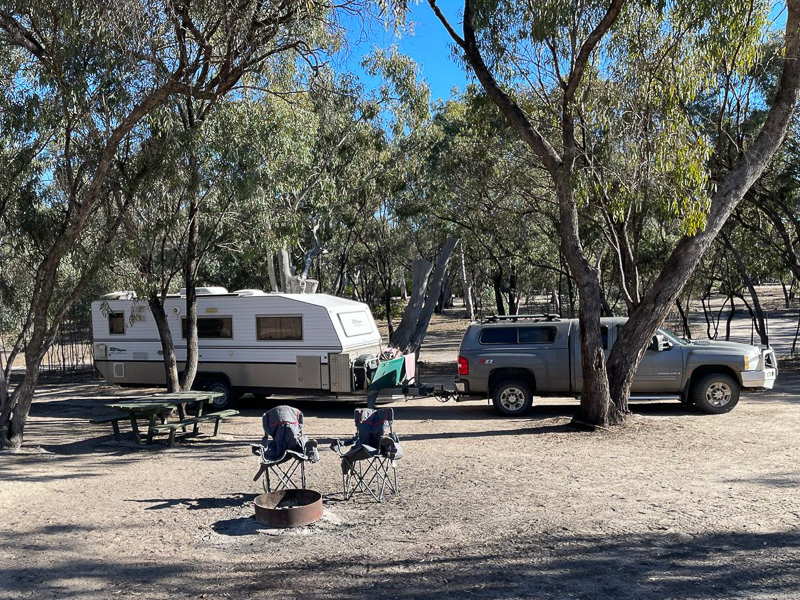
Having been disappointed with our trip through the Big Desert, we were not expecting much from the Little Desert - but this place is a gem. Located a couple of km due south of Dimboola, the Little Desert National Park is actually quite large, but we were only able to get to a small portion of it (the far eastern edge). It extends from Wail west to the South Australian border. Unfortunately, there are only a couple of reasonable roads crossing north to south through the desert. We followed the Wimmera River south out of Dimoboola, through to Horseshoe Bend campground and stayed there. From here, we did drive further south along the river, but we did not take any of the very sandy tracks leading west. These appeared to need a light 4WD with recovery gear, as the sand was around 10cm thick everywhere I looked.
Little Desert National Park stretches across the Wimmera in western Victoria and is one of the most interesting natural areas accessible from Dimboola.
Despite its name, the park is not a barren desert. Its landscape includes heathland, mallee, dry woodland, sandy country, River Red Gums, wetlands and the Wimmera River.
The relatively flat terrain can initially appear visually understated, but Little Desert rewards photographers who slow down and look for smaller details: twisted trees, layered vegetation, wildflowers, sandy tracks, birds, bark textures and subtle changes in light.
The northern edge of the park near Dimboola is particularly useful for photography because it combines classic Little Desert vegetation with the Wimmera River.
Locations such as Horseshoe Bend, Ackle Bend and Pomponderoo Hill are all within relatively easy reach of Dimboola and provide a good introduction to the park.
Spring is generally the most colourful season, when native wildflowers can transform sections of the heathland, while early mornings and evenings are particularly attractive along the river.
The park is also well known for birdlife. Patient photographers may see parrots, honeyeaters, wrens, raptors and a variety of woodland species, while the broader park is important habitat for the elusive Malleefowl.
Important current access note: Little Desert National Park was heavily affected by a major bushfire in January 2025. Some areas have reopened, but sections of the Eastern and Central Blocks remain closed while recovery work continues.
Always check current Parks Victoria conditions immediately before visiting, as closures and track access can change.
Viewpoints
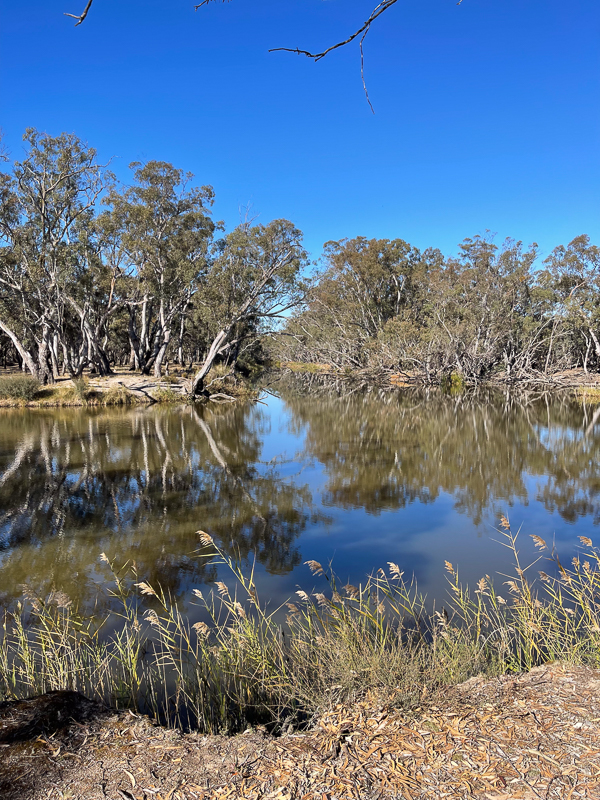
There are two main choices that we found: 1) you can walk the river (there is actually a river walk) and photograph this slow moving river in a desert; 2) you can photograph the trees and landscape; and finally you can photograph the wildlife and macro views of the fauna. All of these will take a day a two. We thoroughly enjoyed our time here.
-
Horseshoe Bend
Horseshoe Bend is one of the best starting points for photographing Little Desert from Dimboola.
The Wimmera River curves through a landscape dominated by large River Red Gums, sandy banks and dry woodland.
When conditions are calm, the river can produce excellent reflections of trees and sky.
Best for: River Red Gums, reflections, sunrise, sunset, birdlife, camping and night photography.
Recommended lenses: 16-35mm and 24-70mm for landscapes; 100-500mm or similar for birds.
Early morning is particularly worthwhile when wind is light and mist occasionally develops around the water.
Parks Victoria currently lists Horseshoe Bend as reopened following the 2025 bushfire.
-
Ackle Bend
Ackle Bend is another excellent Wimmera River location and can be combined easily with Horseshoe Bend.
The river, River Red Gums and open woodland provide a good mixture of conventional landscape subjects and more intimate compositions.
Parks Victoria notes that the short walk towards Ackle Bend provides particularly attractive views of the eastern part of the park around sunset.
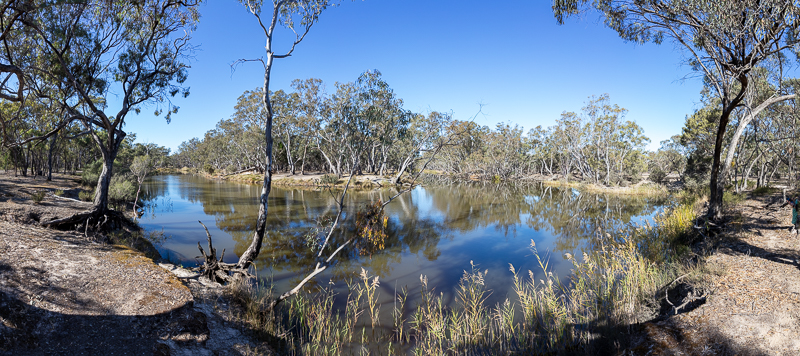
Wimmera River Best for: sunset, river landscapes, trees, birds and reflections.
A telephoto lens is useful for isolating individual trees, branches and reflections across the water.
Ackle Bend
-
Pomponderoo Hill
Pomponderoo Hill is approximately 4 kilometres south of Dimboola and provides one of the best elevated views near the northern edge of Little Desert.
A short loop walk leads through typical Little Desert vegetation to a lookout with broad views across the park, Wimmera River and surrounding agricultural country.
Parks Victoria currently describes the walk as a short, easy self-guided loop, although the track is sandy underfoot.
Best for: panoramic landscapes, sunset, layered vegetation, large skies and environmental photographs of Little Desert.
Recommended lenses: 16-35mm for broad views and 70-200mm for compressed landscape details.
The lookout can be particularly effective when late-afternoon light creates separation between the layers of woodland and surrounding farmland.
Parks Victoria currently lists Pomponderoo Hill as reopened.
-
River Red Gums
The River Red Gums along the Wimmera River are among the strongest photographic subjects in the Dimboola section of the park.
Look for old trees with deeply textured trunks, pale twisting branches and exposed roots.
These trees often work best as individual subjects rather than as part of a large landscape.
Best for: tree portraits, bark texture, monochrome photography and reflected forms.
A 70-200mm lens is particularly useful for simplifying complex woodland scenes and isolating branches against darker backgrounds.
-
Wimmera River Reflections
Calm stretches of the river can behave almost like a mirror.
Instead of photographing the complete landscape, try filling the frame almost entirely with reflected trees and sky.
Turning the final image upside down can sometimes create an effective semi-abstract photograph.
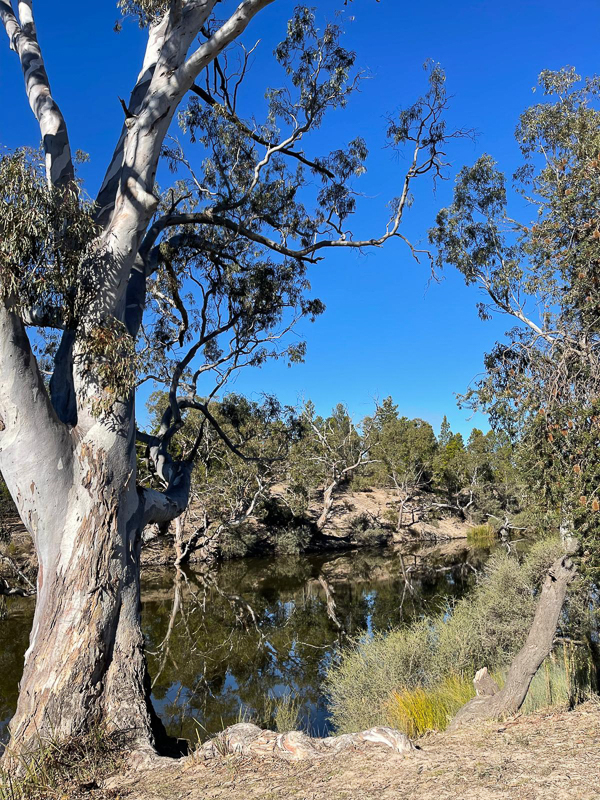
Wimmera River Best conditions: early morning before wind develops.
A polarising filter should be used cautiously because maximum polarisation can remove the very reflections that make the scene interesting.
-
Spring Wildflowers
Spring is one of the best times to explore Little Desert because sections of the heathland can produce a diverse display of native wildflowers.
Rather than photographing only broad patches of colour, look for individual flowers isolated against subdued backgrounds.
Best for: macro photography, intimate landscapes, colour and botanical details.
Recommended lenses: macro lens, 70-200mm or a telephoto lens with useful close-focusing capability.
Overcast conditions are often excellent for wildflower photography because they reduce harsh highlights and deep shadows.
Avoid stepping away from established tracks where doing so may damage fragile vegetation.
-
Mallee and Heathland
Some of Little Desert's most characteristic photographs come from apparently ordinary patches of mallee and heath.
The challenge is to simplify what can initially appear to be a visually chaotic landscape.
Look for:
- Repeated trunks.
- Contrasting patches of colour.
- Strongly shaped individual trees.
- Sandy tracks disappearing into vegetation.
- Layers of plants illuminated by side light.
- Small areas of fire regeneration.
Recommended lens: 70-200mm.
A longer focal length often creates a stronger image than an ultra-wide lens because it removes distracting foreground and compresses the vegetation into simpler layers.
-
Sandy Tracks and Leading Lines
Little Desert's pale sandy tracks provide natural leading lines through darker mallee vegetation.
A winding track disappearing behind trees can provide a simple composition with a strong sense of exploration.
Best light: early morning or late afternoon, when low light emphasises texture in the sand.
Keep vehicles to tracks on which access is legally permitted and observe all seasonal and fire-recovery closures.
-
Birdlife
Little Desert supports a diverse range of woodland, heathland and wetland birds.
The Wimmera River provides particularly useful habitat near Dimboola, while the drier parts of the park support an entirely different collection of species.
The park is also known for the elusive Malleefowl, although sightings should be regarded as a bonus rather than an expectation.
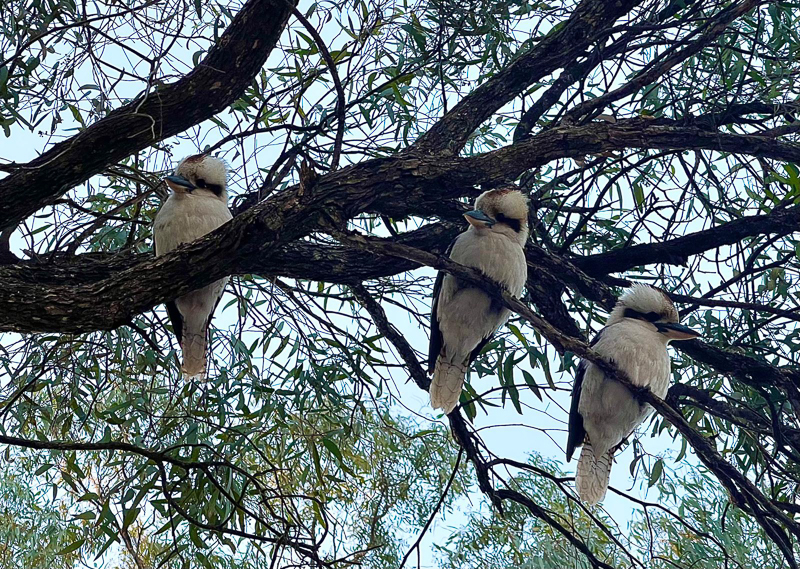
Kookaburras at Horseshoe Bend Campground Recommended lens: 100-500mm, 200-600mm or similar.
Early morning is generally the most productive period for bird activity.
Use existing tracks and avoid approaching nesting birds or repeatedly disturbing wildlife for a photograph.
-
Fire Recovery Landscapes
The January 2025 bushfire dramatically affected large parts of Little Desert National Park.
Where reopened areas allow safe public access, the regenerating landscape can itself become an important photographic subject.
Blackened trunks, new green growth, regenerating heath and changing vegetation provide opportunities to document the natural recovery of the park.
Best for: environmental documentary photography, regeneration, textures and contrasts.
Never enter a closed area simply to obtain photographs.
-
Night Sky and Astrophotography
Little Desert's distance from major urban centres provides excellent opportunities for night photography when skies are clear.
River Red Gums, dead trees, sandy tracks and low heathland can all provide distinctive foregrounds beneath the stars.
Best for: Milky Way, star trails and environmental night landscapes.
A fast wide-angle lens in the 14-24mm range is particularly useful.
Plan the position of the Galactic Centre and moon before travelling rather than relying upon chance.
Other Things to Look Out For
How I photographed the Little Desert
What I took - what was in my kit
I took my LowePro Backpack loaded with Canon 5DSR body, Canon 24-70 zoom, Manfrotto 190 Tripod, and of course a range of lens wipes, spare batteries, sunscreen and bug repellant. Jenny used the Canon 5D MkIII with both the 16-35mm and the 24-105mm. We simply ran out of time and energy here.
Techniques
These were classic landscape photos, but most of them were shot hand held. We simply had too many choices and not enough time.
Nearby Locations
-
Dimboola Street Art - Mallee Emu-Wren
Smug's Mallee Emu-Wren mural in central Dimboola provides an excellent artistic counterpart to the real flora and fauna of Little Desert.
Photographing both locations allows a gallery to connect contemporary street art with the landscape that inspired it.
-
Arkona Silo Art
Arkona lies approximately 10 kilometres north of Dimboola and is another major work by Smug.
Its monumental scale contrasts strongly with the intimate natural-detail photography found within Little Desert.
-
Loch Iel - Pink Lake
Pink Lake provides a completely different landscape based on open space, colour, salt and minimalism.
It is particularly useful as a contrast to the dense vegetation of Little Desert.
Best for: minimalist landscapes, salt textures, colour and reflections.
-
Kiata Sanctuary and Keith Hateley Nature Walk
Farther west, Kiata Sanctuary provides another useful introduction to Little Desert vegetation and wildlife.
The Keith Hateley Nature Walk begins at the Sanctuary Picnic Ground and takes approximately 30 minutes.
Parks Victoria describes it as a useful introduction to the park's native plants and animals, including habitat associated with Malleefowl.
Best for: native plants, birds, woodland details and intimate nature photography.
Nearby Auspano pages
- Dimboola Street Art — approximately 5 km in a straight line; road distance may be considerably longer.
- Pink Lake — Loch Iel — approximately 12 km in a straight line; road distance may be considerably longer.
- Arkona Silo Art — approximately 15 km in a straight line; road distance may be considerably longer.
- Horsham Silo Art — approximately 28 km in a straight line; road distance may be considerably longer.
- Murtoa Stick Shed and Silo — approximately 43 km in a straight line; road distance may be considerably longer.
Location
Use this section to plan location for Little Desert National Park.
Apple Map – Location and Nearby Photographic Locations
This Apple Map identifies Little Desert National Park and 5 nearby Auspano locations. Select a numbered marker or linked page for more detail.
Photographic locations
How to Get There
This is purely drive your own car territory. We towed a van, but you could camp here, or bring a motor home etc. There were tracks to the west that I beleive required a full on 4WD, but you could certainly visit this area in a 2wd family car.
From Dimboola
Dimboola is the most convenient gateway to the northern section of Little Desert National Park.
Horseshoe Bend and Ackle Bend are approximately 7 kilometres south of Dimboola.
Pomponderoo Hill is even closer, approximately 4 kilometres south of town.
This makes it practical to stay in Dimboola and make several separate photographic visits during the best morning and evening light.
From Melbourne
The most straightforward route is:
Melbourne → Ballarat → Ararat → Stawell → Horsham → Dimboola
Allow approximately four hours to reach Dimboola under normal conditions, excluding substantial stops.
Road conditions
Roads into the more developed Dimboola-side visitor areas include unsealed sections.
Horseshoe Bend and Ackle Bend are generally approached by maintained unsealed roads and are commonly accessible to conventional vehicles, caravans and camper trailers under suitable conditions.
Other parts of Little Desert contain much sandier tracks where four-wheel drive may be required.
Never assume a track is open because it appears on a navigation system.
Bushfire recovery, seasonal closures, wet weather and maintenance can all alter access.
Current access and closures
This section should be checked immediately before publishing or travelling.
A major lightning-started bushfire swept through approximately 70% of Little Desert National Park in January 2025.
Parks Victoria has progressively reopened sections of the park, but recovery work remains ongoing.
At the time this page was prepared:
- Horseshoe Bend campground and day visitor area is open.
- Ackle Bend campground and day visitor area is open.
- Pomponderoo Hill is open.
- The Western Block remains open, including its 4WD tracks and dispersed camping areas where otherwise permitted.
- Kiata Sanctuary Picnic Ground is open.
- Keith Hateley Nature Walk is open.
- Parts of the Eastern Block remain closed, including the Stringybark Walk.
- Parts of the Central Block remain closed.
- The Little Desert Discovery Walk remains affected by closure.
Parks Victoria may alter these arrangements as repair and ecological recovery progresses.
Always check:
Parks Victoria - Little Desert National Park current conditions
Driving from the State Capital
The state capital is used as a consistent reference point. Apple Maps calculates the automobile route to this location; your actual route may vary with your starting point, traffic, roadworks and temporary closures.
State capital to destination
Calculating the driving route with Apple Maps…
Distance and travel time are Apple Maps estimates and may change with the route and current conditions.
Current Access / Conditions
There are no known issues with getting to this location.
Best Time to Visit
I think some time is required here. Early morning and late evening provides better light, and it is also when more of the local animals come out. That said, I would go here any time of the year.
Autumn - March to May
Autumn generally provides mild conditions and attractive warm tones in the woodland and surrounding Wimmera landscape.
Clear nights can also be useful for astrophotography.
Good for: River Red Gums, reflections, landscapes and stars.
Winter - June to August
Winter provides low sun angles, softer daylight and the possibility of dramatic cloud.
Damp conditions can increase colour saturation in bark and vegetation, although some tracks may become more difficult or be subject to seasonal closure.
Good for: woodland, moody landscapes, reflections and dramatic skies.
Spring - September to November
Spring is the best overall season for photographing Little Desert.
Native wildflowers can provide splashes of yellow, white, purple and pink throughout the heathland, while bird activity also increases.
The landscape is often greener and more visually varied than during the hotter months.
Good for: wildflowers, birds, wildlife, landscapes, woodland and macro photography.
Summer - December to February
Summer emphasises the dry character of Little Desert and can produce dramatic sunsets and thunderstorms.
Temperatures can become extremely high and bushfire danger can be severe.
Concentrate photography around sunrise and late afternoon and avoid unnecessary activity during extreme heat.
Always check the fire danger rating before entering the park.
Good for: dry landscapes, sunset, storms and astrophotography.
Best overall photographic period
For a first dedicated photography trip I would choose late September to October.
This provides the best combination of:
- Spring wildflowers.
- Active birdlife.
- Moderate daytime temperatures.
- Greener vegetation.
- Variable skies.
- Comfortable sunrise and sunset times.
Accessibility
Accessibility within Little Desert National Park varies substantially because many tracks and walking routes cross naturally sandy and uneven terrain.
Horseshoe Bend and Ackle Bend
These are among the most practical locations for visitors who want to experience the park without undertaking a long bushwalk.
Vehicle access places visitors relatively close to the Wimmera River and River Red Gum environment.
However, surfaces around the river and campground can include sand, compacted earth, grass, exposed roots and uneven ground.
Conventional wheelchair access to every photographic position should therefore not be assumed.
Pomponderoo Hill
The Pomponderoo Hill Nature Walk is short, but Parks Victoria specifically describes the route as sandy underfoot.
This may make the walk difficult for conventional wheelchairs and some people using walking aids.
Photography with limited mobility
Photographers with reduced mobility can still obtain worthwhile images without undertaking the park's longer walking routes.
The most practical subjects are likely to include:
- River Red Gums close to established day-use areas.
- Wimmera River views from accessible parking locations.
- Woodland and vegetation beside formed roads.
- Birdlife from quiet roadside or picnic locations.
- Sunset and night-sky photography from established visitor areas.
Parks Victoria also provides information about all-abilities access and specialist equipment in Victorian parks.
Assistance dogs are permitted in Parks Victoria parks and reserves, subject to the relevant national-park entry requirements.
Where to Stay
Camping in the park is definitely my recommendation. That said, there was accomodation in Dimboola (4km away), and in bigger towns such as Horsham.
Horseshoe Bend Camping Area
For photographers who want immediate access to sunrise, sunset and Wimmera River landscapes, Horseshoe Bend is one of the most useful places to stay.
The campground places River Red Gums and the river within easy reach and also provides access to dark skies after sunset.
Advance booking and payment are required year-round.
Each campsite accommodates a maximum of six people.
Parks Victoria - Horseshoe Bend Camping Area
Ackle Bend Camping Area
Ackle Bend is another attractive option for photographers wanting a riverside base.
It provides convenient access to sunset views and quieter sections of the Wimmera River environment.
Check current Parks Victoria booking and access information before arrival.
Dimboola Riverside Holiday Park
For photographers wanting more facilities, I would use Dimboola Riverside Holiday Park as the principal accommodation base.
It is beside the Wimmera River and allows Little Desert, Arkona, Dimboola's murals and Pink Lake to be visited without moving camp.
This is particularly convenient for photographers travelling with a caravan or larger vehicle.
Address:
2 Wimmera Street
Dimboola VIC 3414
Dimboola Motel
Dimboola Motel provides a straightforward alternative for photographers wanting a conventional room and easy vehicle access.
Address:
35-43 Horsham Road
Dimboola VIC 3414
Photography Recommendations
-
16-35mm wide-angle lens
Useful for Wimmera River landscapes, dramatic trees, large skies and night photography.
-
24-70mm standard zoom
Excellent for general landscapes, River Red Gums and travel photography around the developed sections of the park.
-
70-200mm telephoto
One of the most useful lenses in Little Desert.
Use it to simplify complex vegetation, compress layers of woodland, isolate individual trees and create intimate landscapes.
-
100-500mm or similar wildlife lens
Highly recommended for birds and wildlife.
A longer lens also allows interesting compressed landscapes across the river and heathland.
-
Macro lens
Particularly valuable in spring for wildflowers, insects, bark, seed pods and small vegetation details.
-
Tripod
Useful for sunrise and sunset beside the Wimmera River and essential for serious astrophotography.
-
Polarising filter
Useful for controlling glare on foliage and increasing saturation after rain.
Use it cautiously around the river because strong polarisation can remove attractive reflections.
-
Look for intimate landscapes
Little Desert rarely presents the obvious grand landscape found in alpine or coastal areas.
The strongest images often come from simplifying small sections of vegetation rather than trying to include everything.
-
Use backlight
Low-angle backlight can illuminate grasses, leaves and wildflowers and create separation within otherwise dense vegetation.
-
Watch for wildlife around dawn
Arrive before sunrise and remain quiet.
Birds and other wildlife are generally most active before the temperature rises and visitor activity increases.
-
Carry more water than expected
Little Desert can become hot and remote very quickly.
Do not rely upon finding drinking water in the park.
-
Download maps before entering
Mobile reception can be unreliable or absent in parts of the park.
Carry offline mapping and preferably a paper park map when travelling beyond the developed Dimboola-side areas.
Suggested photographic sequence
For a photographer based in Dimboola, I would organise a full Little Desert photography day approximately as follows.
-
Before sunrise - Horseshoe Bend
Arrive while it is still dark and set up beside the Wimmera River.
Look for reflections of River Red Gums and pre-dawn colour in the water.
-
Sunrise - Wimmera River
Work both wide and telephoto compositions as warm light reaches the trunks and upper branches.
-
Early morning - bird photography
Change to the long lens while birds are active around the river and woodland.
-
Mid-morning - intimate woodland photography
Use the 70-200mm to isolate trees, bark patterns, branches and patches of vegetation.
-
Late morning - wildflowers
In spring, concentrate on flower and plant details while daylight is relatively even.
Overcast conditions are particularly useful for this work.
-
Midday - return to Dimboola
Use the harshest part of the day for lunch, checking photographs and visiting Dimboola's Mallee Emu-Wren mural or other town attractions.
-
Mid-afternoon - Pomponderoo Hill
Walk to the lookout and scout possible late-afternoon compositions.
Use a telephoto lens to identify layered views that may become more interesting as the sun drops.
-
Late afternoon - Ackle Bend
Photograph River Red Gums and woodland as low-angle light begins to warm the landscape.
-
Sunset - Ackle Bend or Pomponderoo Hill
Choose the location according to current cloud and wind.
Use Ackle Bend when reflections and river colour look promising, or Pomponderoo Hill when the sky is likely to dominate the image.
-
Blue hour - River Red Gums
Remain after sunset as the colour temperature cools and the trees become silhouettes.
-
Night - astrophotography
On a clear night, use an established safe visitor area for Milky Way or star-trail photography.
A twisted River Red Gum can provide a much stronger foreground than an otherwise empty horizon.
How long should a photographer stay?
Little Desert can be sampled in a single day from Dimboola, but two nights is a much better photographic visit.
This provides at least two opportunities for sunrise and sunset, allows time for bird and wildflower photography and gives some protection against poor light or wind along the river.
In spring I would happily allow two full days, particularly if macro and wildlife photography are important.
My priority photographs
If time is limited, I would regard these as the essential Little Desert photographs near Dimboola:
- A River Red Gum reflected in the Wimmera River at sunrise.
- A wide river landscape from Horseshoe Bend.
- A telephoto study of a single old River Red Gum.
- A panoramic view from Pomponderoo Hill.
- A sandy track disappearing into mallee vegetation.
- A compressed 70-200mm woodland composition.
- A spring wildflower close-up.
- A native bird photographed in its environment rather than against an artificial perch.
- A sunset photograph at Ackle Bend or Pomponderoo Hill.
- A night photograph using a River Red Gum or mallee tree beneath the stars.
Little Desert National Park is not a location where the best photograph necessarily reveals itself immediately.
Its strength lies in the relationship between river, woodland, heathland, wildlife, small botanical details and large Wimmera skies.
For that reason I would approach Little Desert quite differently from a conventional lookout or silo-art stop. Spend less time searching for one spectacular viewpoint and more time looking carefully at changing light, isolated trees, reflections and small sections of the landscape.
For an Auspano gallery, I think the strongest visual story would combine a wide Wimmera River landscape, intimate River Red Gum studies, spring flora, birdlife, a view from Pomponderoo Hill and a final sunset or night photograph.
Suggested Photographic Sequence
Work through the location in an order that makes the best use of changing light and conditions.
How Long Should a Photographer Stay?
Allow enough time to photograph the location in more than one light or weather condition where practical.
My Priority Photographs
Use this section for the practical photographic shot list for the location.
Photo Subjects
Explore related Auspano photography guides by subject.
Photographer Comments & Updates
Have you photographed this location? Share your photographs, viewpoints, photography tips or recent access updates, or ask a question about visiting. When uploading your own photographs, please include your name and the date each photograph was taken. Date any access or track-condition observations; visitor reports may become outdated, so check official information before travelling.